ServicesWalkways and Sidewalks
Walkways and Sidewalks in Buena Park
When a storm drops a limb, roots lift a slab, or rain leaves your path tilted and puddled, we take out the bad sections and pour new concrete that sits flat and drains away from your home. It starts with one phone call.
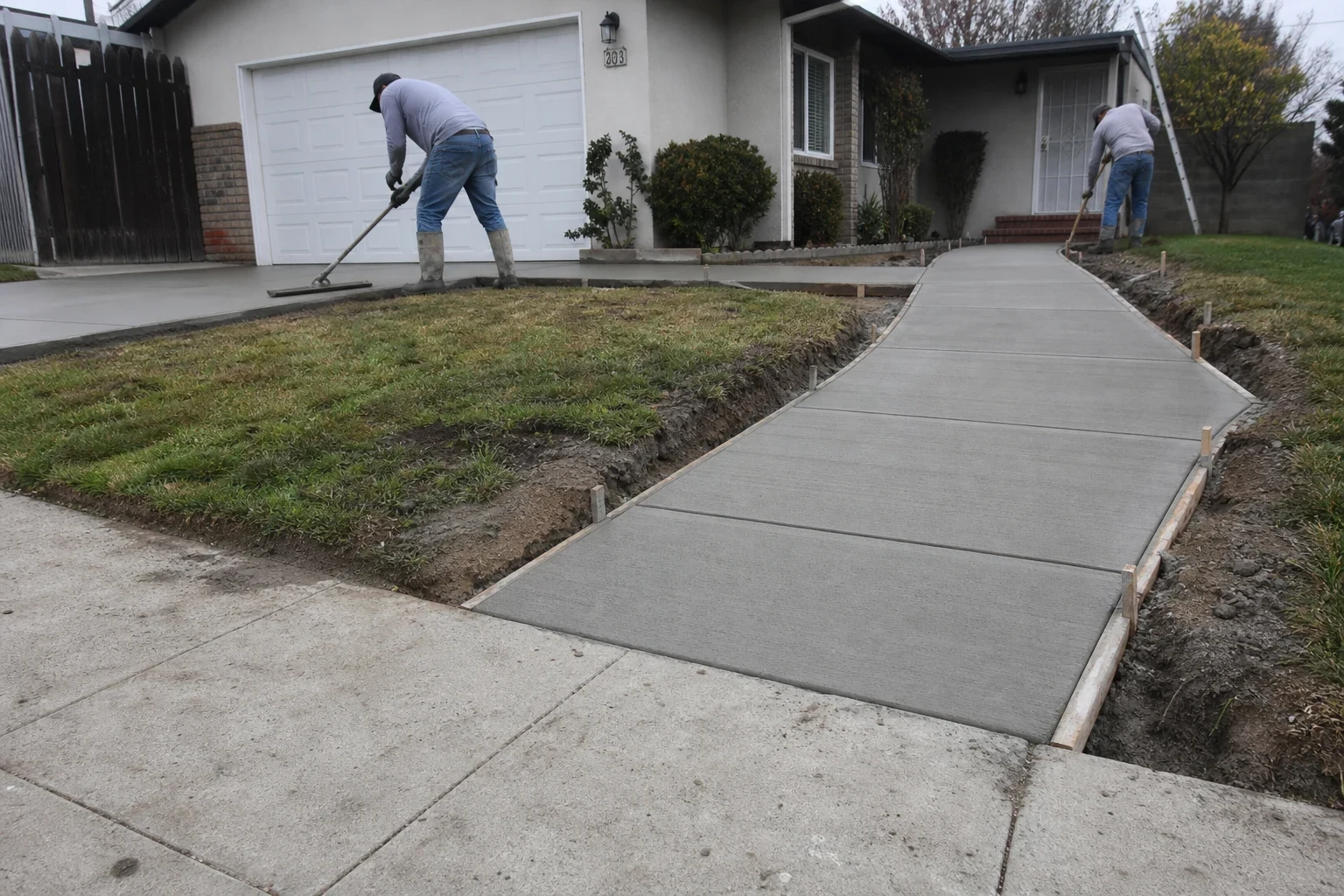
New paths after damage, done in the right order
A walkway takes more abuse than people think. Every trip to the front door. Every trash can rolled to the curb. Then a wet winter soaks the soil, a tree root keeps growing, and one morning a slab edge sits an inch above the next one. That is a trip hazard, and it rarely gets better on its own.
We pour new walkways and sidewalks: front entries, paths to the side gate, routes across the backyard and the strip out by the street. When damage is the reason you called, we figure out why it happened before we pour. Roots, poor drainage and a thin old slab on soft fill each need different prep.
We do not patch or resurface old concrete. If a section has failed, we remove it and replace it with a new pour that is formed, reinforced and sloped to move water off.
What a new walkway includes
- Tear-out and haul-off
- We break out the old concrete, pavers or asphalt and haul it away. You are not left with a pile of rubble by the curb.
- Roots and base
- Roots that lifted the old slab get cut back where it is safe for the tree. Then we lay and compact a base of crushed rock so the new walk has firm ground under it.
- Forms and slope
- We set forms so the walk pitches slightly to one side, usually away from the house. Rain runs off instead of sitting on the surface or heading toward your foundation.
- Reinforcement and joints
- Rebar or wire mesh goes in before the pour. We cut control joints at even spacing so the small cracks all concrete gets land in the joint, not across the middle of a panel.
- A finish that grips
- Most walks get a broom finish for traction when wet, with smooth tooled edges. If you want a pattern or color, we can do the path in stamped concrete instead.
- Street-side sidewalk work
- The strip along the street often sits in the public right-of-way. We will tell you if a city permit is needed and handle that step with you before work starts.
Signs your walkway needs replacing
Edges lifted by roots
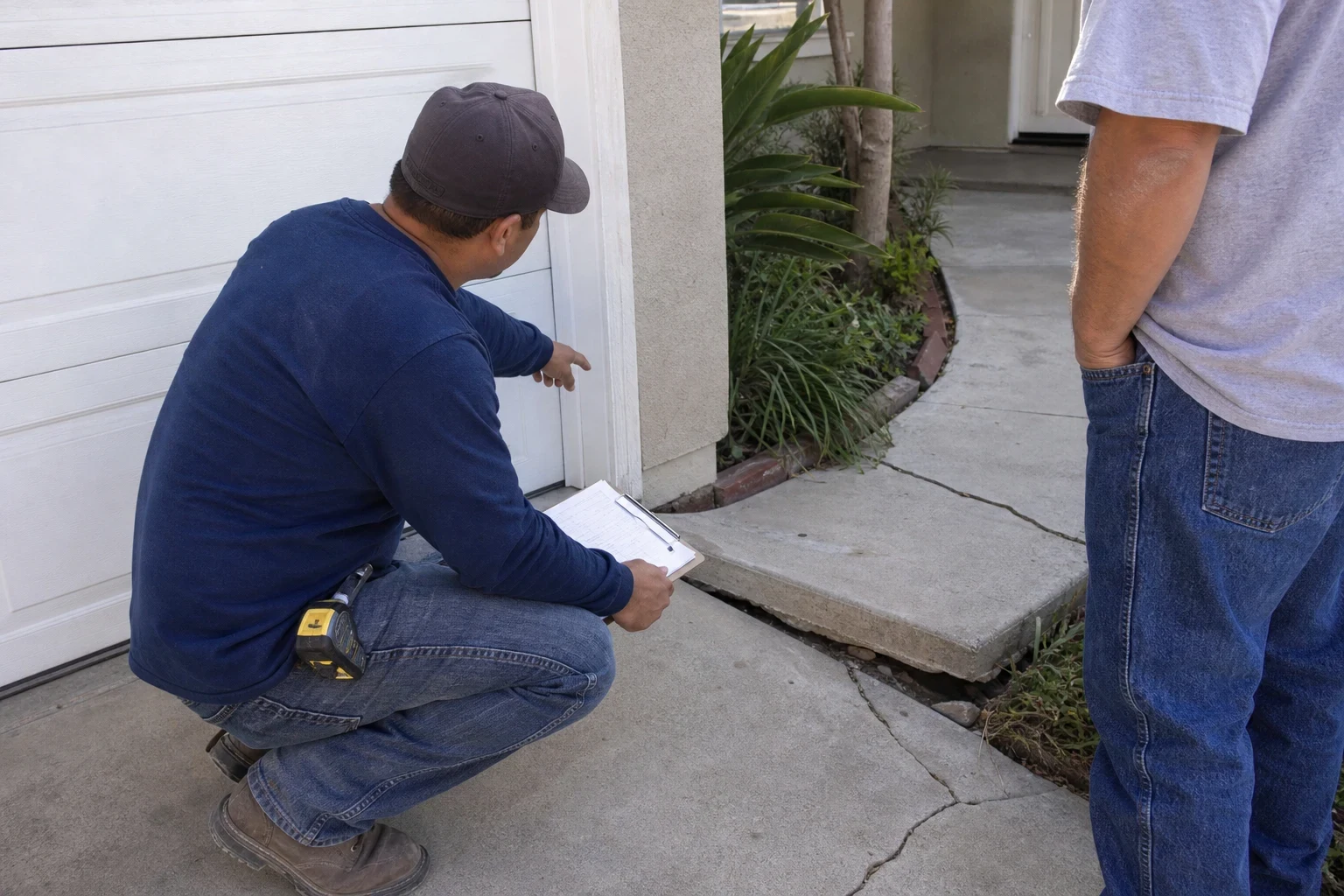
A raised lip between panels catches toes, strollers and walkers. Grinding it down only lasts until the root grows again.
Sections that sank after rain
Heavy storms can wash soil out from under a slab. If a panel dropped or tipped after a wet spell, the ground below has moved and the slab has lost its support.
Water flowing toward the house
If rain runs off the path toward your walls, or puddles at the front step for a day, the slope is wrong.
Wide or uneven cracks
Thin surface lines show up in almost every slab and are nothing to worry about. A crack wide enough to slip a key into, or one where the two sides no longer sit at the same height, tells you the panel is coming apart.
Impact damage
A fallen tree or a heavy truck parked on the walk can crush a slab in one go. Once a panel is broken into pieces, a new pour is the sensible fix.
What moves the price
Every walkway is priced from what we see on site, so we do not quote numbers over the phone without looking. The estimate you get spells out each part of the job. These are the things that make the biggest difference.
Length and width
More square footage means more concrete, more forming and more labor. A wider path for wheelchairs or carts costs more than a narrow garden path.
What comes out first
Thick old concrete with rebar in it takes longer to break and haul than thin pavers or dirt.
Roots and soil
Large roots, soft fill or washed-out soil add prep time and base material.
Finish choice
A broom finish is the simplest. Color, exposed aggregate or a stamped pattern add materials and labor.
Permits and access
Work in the public sidewalk may need a city permit. Tight side yards where the truck cannot reach mean wheeling concrete in by hand.
How the job goes
- 1
The phone call
Tell us what happened and what the walk looks like now. If something is a real hazard, we will tell you how to block it off until we can get there.
- 2
The site visit
We measure, check the soil and look for the cause. We take photos of what we find so you can see it too.
- 3
A written estimate
You get a line-by-line estimate: tear-out, base, concrete, finish, permits. If it is a good idea to replace only some panels, we say so.
- 4
Demo and pour
Most walkways take a day or two. We remove the old concrete, prep the base, set forms and pour. We keep the work area roped off and sweep up before we leave.
- 5
Cure time
You can usually walk on it within a day or two. Keep heavy loads off it for about a week while it gains strength.
Walkway questions we hear
Will my insurance pay for a walkway damaged by a falling tree?
It depends on your policy, and your insurance company makes that call, not us. What we can do is give you photos of the damage and a line-item estimate you can hand to the adjuster. Call your insurer early so they can see it before the old concrete comes out.
Can you match the new section to my old walkway?
New concrete looks lighter than concrete that has weathered for years. The color evens out some over time, but not all the way. Replacing full sections out to the joint lines makes the difference look planned, not patched.
Who is responsible for the sidewalk out by the street?
In many cities the homeowner is responsible for that strip even though it is public right-of-way. Rules differ between Buena Park and nearby cities like Cypress or Fullerton. We will tell you what applies to your address and whether a permit is needed.
Will the tree just lift the new walk again?
It can if nothing changes. We cut back the roots that caused the problem and can add a root barrier along the edge. For a large tree right next to the path, rerouting the walk a few feet is sometimes the better long-term choice.
How long until I can use my front walk again?
Plan on a day or two of no foot traffic. We can often leave a side path or set boards so you can still get to the door.
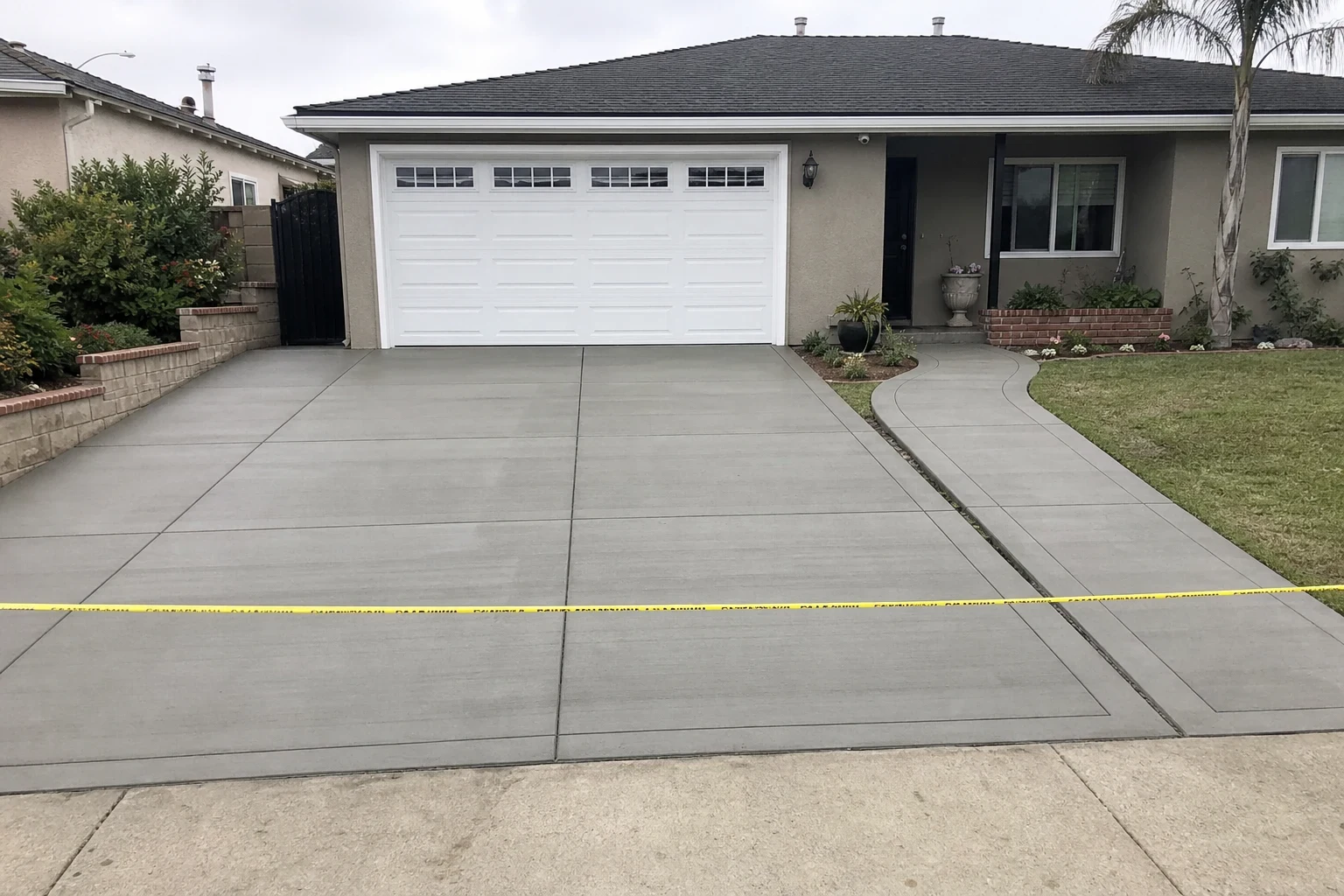
Get your walkway back to level
Tell us what happened and we will come look, find the cause and give you a written estimate. No pressure, just a straight answer on what it takes.