ServicesGarage Floors
Concrete Garage Floors in Buena Park
When your garage floor has sunk, heaved or taken on water, we take out the old slab and pour a new one. We prep the base and add steel. We slope it so water runs out the door, not toward your walls.
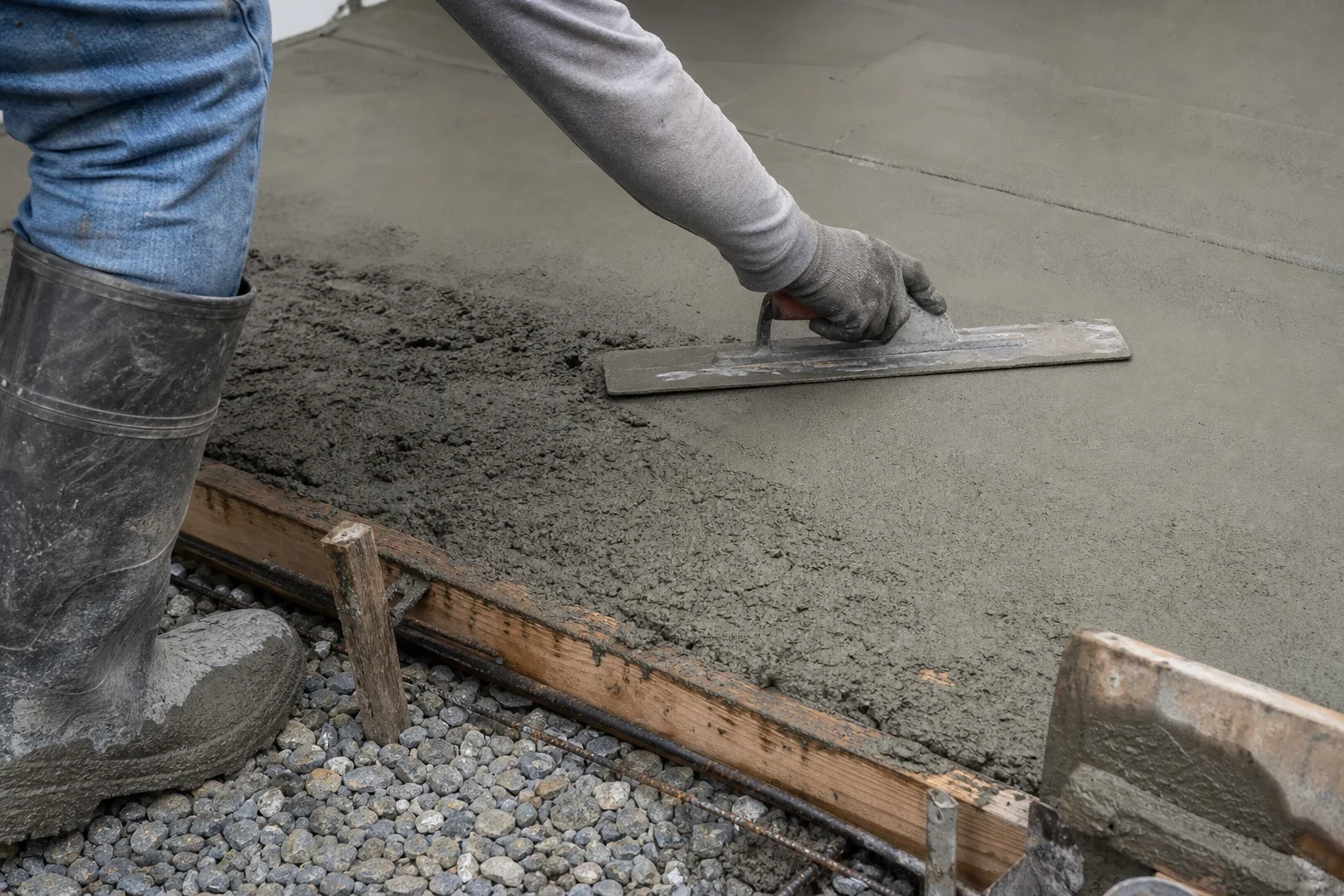
A new floor when the old one is done
A garage floor carries a lot. Two cars, a water heater, shelves full of stuff, and the odd oil leak. When the slab under all that starts to drop, tilt or break apart, patching it rarely holds. A new pour fixes the cause, not just the look.
We do full garage floor replacement and new garage slabs. We dig out what failed, fix the ground underneath and pour fresh concrete at the right thickness. After a heavy winter storm, a lot of our calls are from people who found water sitting in the garage and a crack they had never seen. We come look, tell you plainly what we see and what it takes to make it right.
What the job includes
- Tear-out and haul-off
- We saw-cut the old slab clean along the door line and break it out. Every piece leaves on our truck. You are not left with a pile of rubble in the driveway.
- Base and soil prep
- Most floors fail from below. We dig out soft or wet soil, bring in fresh base rock and compact it in layers. You will never see this part, and it matters more than anything else.
- Steel and thickened edges
- Rebar goes up on small supports so it ends up near the center of the pour instead of lying in the dirt. Edges and the door threshold get extra depth, since that is where tires hit first.
- Slope toward the door
- We build in a gentle fall so blown-in rain, car drip and hose water run out the front. No more puddles along the back wall or under the shelves.
- Finish and control joints
- You get a smooth steel-trowel finish that sweeps easily, or a light broom finish if you want more grip. We cut control joints so shrinkage lines run straight instead of wandering.
- Cleanup
- We cover your door track and walls during the pour and clean up before we leave.
Signs your garage floor needs replacing
Water pools after rain
If water collects in the middle or runs toward the house, the slab has settled or was never sloped right. That water soaks into drywall, boxes and the base under the floor.
One side has dropped
A slab that has sunk at a corner or along a wall means the soil below has washed out or compressed. It usually keeps going.
Cracks with a lip
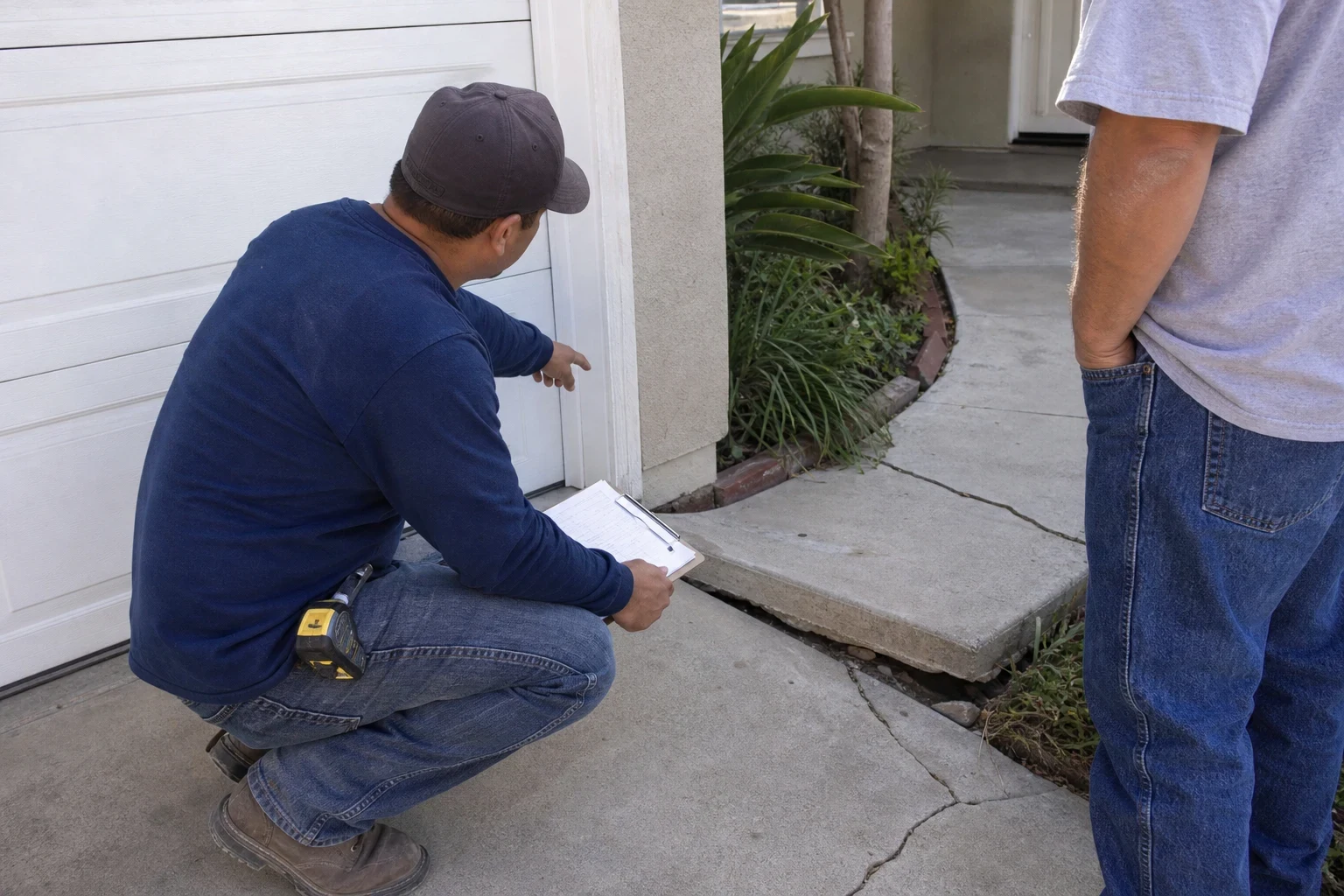
Hairline cracks are normal. Cracks that are wide, or where one side sits higher than the other, mean the pieces are moving. That is a trip hazard and a sign the base has failed.
Surface flaking off
When the top layer scales and breaks loose, the concrete underneath is weak or was finished poorly. Sealers and coatings will not stick to it.
A gap at the driveway
If your garage floor and driveway apron no longer line up, water gets in between and works under both. It is worth a look before the next rainy season.
What moves the price
No two garages are quite the same, so we price yours after we have seen it. The biggest swings come from what is under the old slab and how much of it has to come out. The written estimate breaks the job into its parts, and each one has its own line and number.
Size of the garage
A one-car garage takes far less concrete and labor than a three-car. We measure your actual floor instead of guessing from the outside.
Removing the old slab
Thicker slabs, heavy steel or old epoxy coatings take longer to break out. They also mean more truckloads to haul away.
What is underneath
Dry, firm soil needs little work. Soft, wet or washed-out soil has to be dug out and replaced with new base, which adds time and material.
Thickness and steel
If you park a heavy truck or plan to add a lift, we pour thicker and use more rebar. It costs more now and saves you trouble down the road.
Permit and access
Some jobs need a city permit. A tight side yard or a long carry from the street can also add labor.
How the work goes
- 1
We look and measure
We come out, check the slab, the slope and the ground around it, and take photos of what we find. Then we put the price on paper, broken out by tear-out, base, steel and pour, so you can see where the money goes. If the city requires a permit for your job, we pull it.
- 2
You clear the garage
We need the floor empty, wall to wall. We give you the dates ahead of time so you can plan where the cars and boxes go.
- 3
Demo and base day
We cut and remove the old slab, dig out bad soil, then bring in and compact new base. Steel and forms go in after that.
- 4
Pour day
The concrete truck arrives and we place, level and finish the floor in one go. Joints get cut once the surface is firm enough.
- 5
Curing and final walk
After a day or two the floor is fine to walk across. Keep vehicles out for roughly a week while the slab builds strength for the weight of a car. Before we call it finished, we walk the new floor with you.
Garage floor questions
How long until I can park in the garage again?
Plan on about a week. Foot traffic is fine after a day or two, but the concrete keeps getting stronger for weeks. Keeping the car off for that first week protects the surface from tire marks and early stress.
Do I have to empty the whole garage?
Yes. We need the full floor clear to cut, dig and pour it as one piece. If something cannot move, like a water heater, point it out when we come by and we will plan the work around it.
Water got into my garage in a storm. Is the floor ruined?
Not always. We check whether the slab has dropped or cracked and whether the soil under it washed out. If the floor is sound, we will say so. If it needs to come out, we will show you the reasons in photos.
Will insurance pay for a new garage floor?
That depends on your policy and on what caused the damage. We are not the adjuster, but we can give you a written estimate and photos of what we found. Those are useful when you talk with your insurance company.
Can you make the new floor line up with my driveway?
Yes. We set the height at the door so the new floor meets your driveway apron cleanly. If the driveway is also in rough shape, we can price new driveway work at the same time so both pours match.
Will the new floor crack?
As fresh concrete dries out, it pulls in a little, and that can leave fine lines. The control joints we cut give those lines a straight, planned spot to form. Solid base work and steel keep the slab from moving, and movement is what causes the wide, uneven cracks.
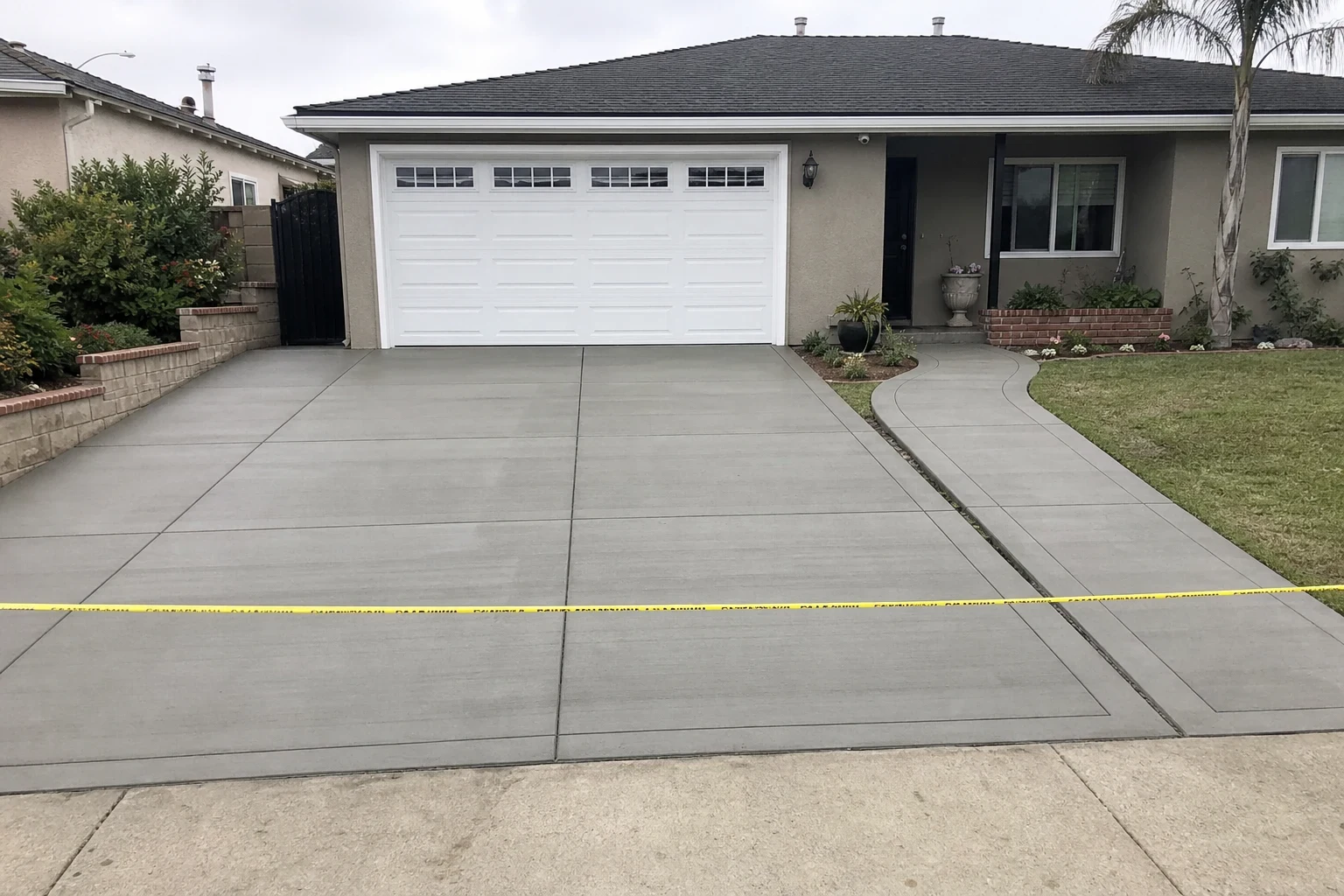
Ready for a garage floor that stays put
Tell us what you are seeing out there. We will come take a look, measure, and walk you through what a new floor involves.