ServicesStamped Concrete
Stamped Concrete in Buena Park
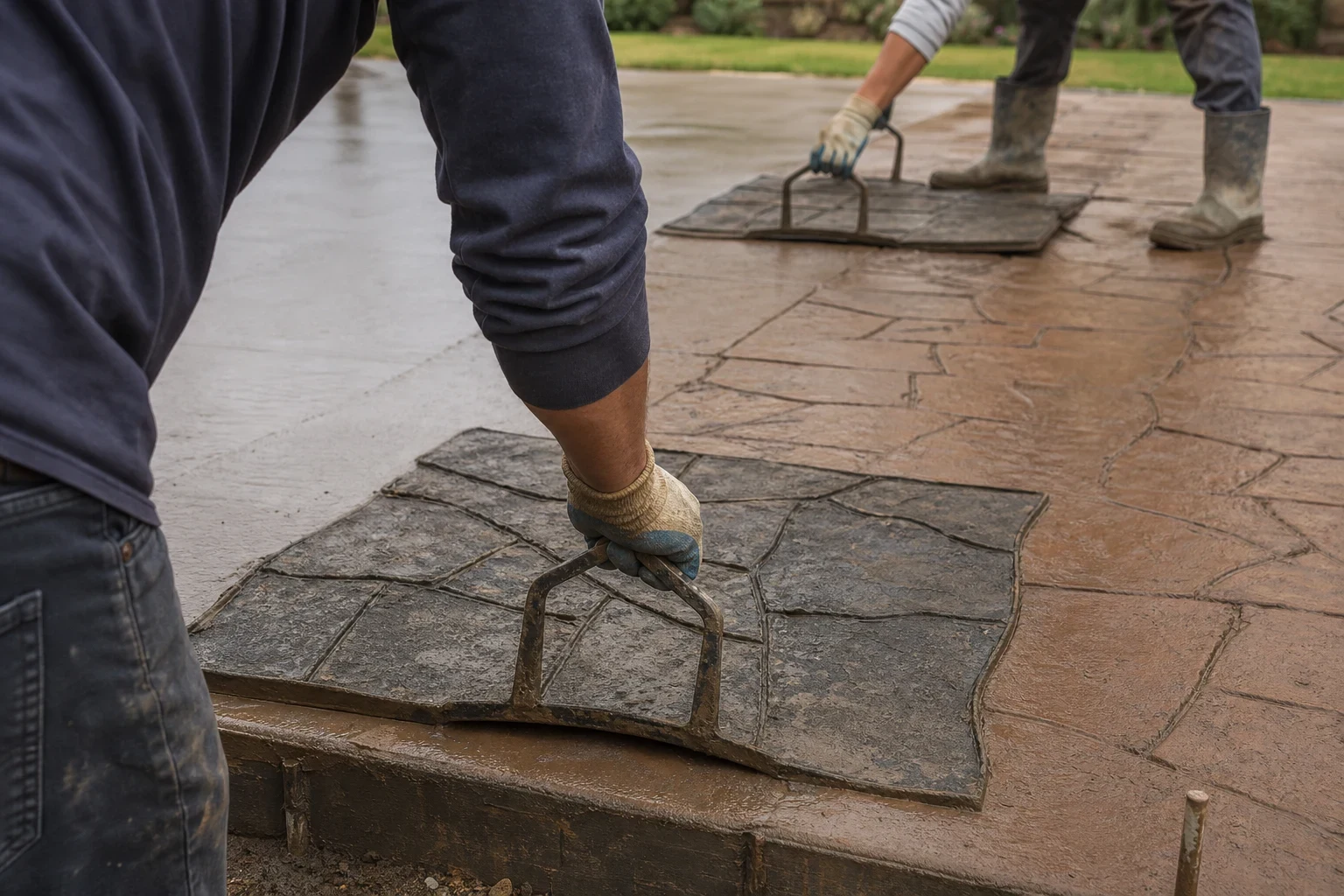
Stamped concrete gives you the look of slate, stone or wood plank in one poured slab. We get the base, slope and joints right first. Then we press the pattern, color it and seal it. You end up with a surface that looks good and moves water away from your home.
When stamped concrete is the right call
Stamped concrete is regular concrete that we color and press with textured mats while it is still soft. It works well for patios, walkways, pool decks, courtyards and driveways. It makes sense when you want more than plain gray but do not want loose pavers that sink, shift and grow weeds in the joints.
A lot of our calls come after a hard winter rain. Water sat against the house for a day, or an old slab heaved and broke into pieces, and now it has to come out. That is the time to slow down and plan before anything gets poured. We look at where the water went, correct the grade under the new slab, and only then talk about pattern and color.
Most of what makes stamped work last is out of sight. Compacted base, steel, the right slope and control joints in the right places do the real work. The pattern is the last step, not the first.
What you get with stamped concrete from us
Removing the old surface
Old slabs, pavers or lawn come out first, and we load every piece onto our truck and take it away. Nothing gets left in a heap along the side of the house.
Grade and gravel base
We shape the soil so the finished slab sheds water away from your home. A layer of gravel goes down next and gets compacted tight. Most drainage trouble gets solved right here.
Forms and reinforcement
Forms mark the outline, including any curves you want. Rebar or wire mesh sits inside the slab to keep it tied together as the soil shifts over time.
Color and pattern
The base color goes into the mix, so it runs through the whole slab instead of sitting on top. We add a release color into the texture to give it depth. Popular choices are ashlar slate, cobblestone, flagstone and wood plank, and a contrasting border is an option.
Joints and sealer
Control joints get cut, usually tucked into the grout lines so they blend in. After curing, we rinse the surface and roll on sealer that holds the color and helps the slab resist water and stains.
Signs it is time for new stamped concrete
Water pools by the house
If rain sits against the wall or runs toward the foundation, the old slab is sloped wrong. New concrete with the right fall solves that.
The slab heaved or broke apart
Big cracks, raised sections and pieces that rock underfoot usually mean the base failed. Replacing the slab with a proper base is the sensible fix.
Trip edges on walks and steps
A lifted edge of half an inch or more catches toes. Kids and older family members are the ones who find it first.
Pavers sinking or full of weeds
Loose pavers settle unevenly after wet seasons. A single stamped slab keeps the look without the gaps.
Plain concrete you are tired of
Sometimes nothing is wrong except the look. If the yard is getting redone anyway, stamping adds a finish that matches your home.
How the work goes, start to finish
- 1
Call and site visit
Start with a phone call. Tell us what broke or what you have in mind, and we pick a day to stop by. On site we take measurements, check where water drains, look at how we get equipment in and photograph what we see.
- 2
Choosing pattern and color
We show you samples and help match a pattern and color to your house. Then you get a written estimate with every piece of the work priced on its own line.
- 3
Tear-out and prep
The old surface comes out, the soil gets graded and the base gets compacted. Forms and steel go in next. If your job calls for a city permit or inspection, we take care of it.
- 4
Pour and stamp day
The concrete truck shows up, and we spread and level the mix, apply the release color and press in the mats at just the right moment. It runs long for our crew, and we keep the mess inside the work zone.
- 5
Cut, cure and seal
Joints get cut within about a day. Once the slab has cured, we wash off the release and seal it. Before we leave, we walk the finished surface with you.
What moves the cost of stamped concrete
Stamped concrete costs more than a plain broom finish because of the color, the mats and the extra crew it takes on pour day. The bigger swings come from what is underneath and how hard the site is to reach. Your written estimate breaks out each of these so nothing shows up later as a surprise.
- Size and shape
- Square footage drives the material order. Curves, angles and tight corners take more forming and more hand work.
- Pattern and color layers
- A single pattern with one release color is the simplest. Borders, two-tone color and detailed patterns add labor.
- Tear-out and access
- Breaking out a thick old slab costs more than removing grass. If a truck cannot reach the back, concrete has to be pumped or wheeled in.
- Grading and drainage work
- Fixing a slope that sent water toward the house can mean moving soil or adding a drain. This is the part we would never skip.
- Steps and add-ons
- Stamped steps, seat walls or matching edges around a pool deck add forming and finish time.
Stamped concrete questions we hear
Something not covered here? (714) 410-2675
How soon can we use it?
You can usually walk on it after a day or two. Patio furniture can go back after about a week. On a driveway, give it closer to ten days before parking, and longer for heavy trucks. We will tell you what fits the weather on your pour.
Is stamped concrete slippery?
Sealer can make it slick when wet, so we mix a grit additive into the sealer on request. Around a pool, we also steer you toward textures with more grip, like slate or flagstone, rather than smooth patterns.
Will it crack?
All concrete cracks some as it shrinks and the ground moves. A good base, steel and well-placed control joints keep cracks small and put them where the pattern hides them.
How often does it need sealing?
Most stamped concrete wants a fresh coat of sealer every two to three years. Full sun and heavy foot traffic wear it faster. Keeping it sealed keeps the color from looking chalky.
My old patio was damaged in a storm. Will insurance pay for new stamped concrete?
That depends on your policy and what caused the damage, and only your adjuster can decide it. What we can do is give you a written line-item estimate and photos of what we found. Many homeowners use those when they talk to their insurance company.
Plan your stamped concrete the right way
Tell us what happened to the old slab or what you want the yard to look like. We will come out, check the drainage and walk you through patterns and colors before anything gets poured.