ServicesConcrete Slabs
Concrete Slabs in Buena Park
We pour new concrete slabs for sheds, hot tubs, equipment pads and the spots where an old slab sank or washed out. We dig to firm ground, compact the base, set steel and slope the surface so water runs away from your home.
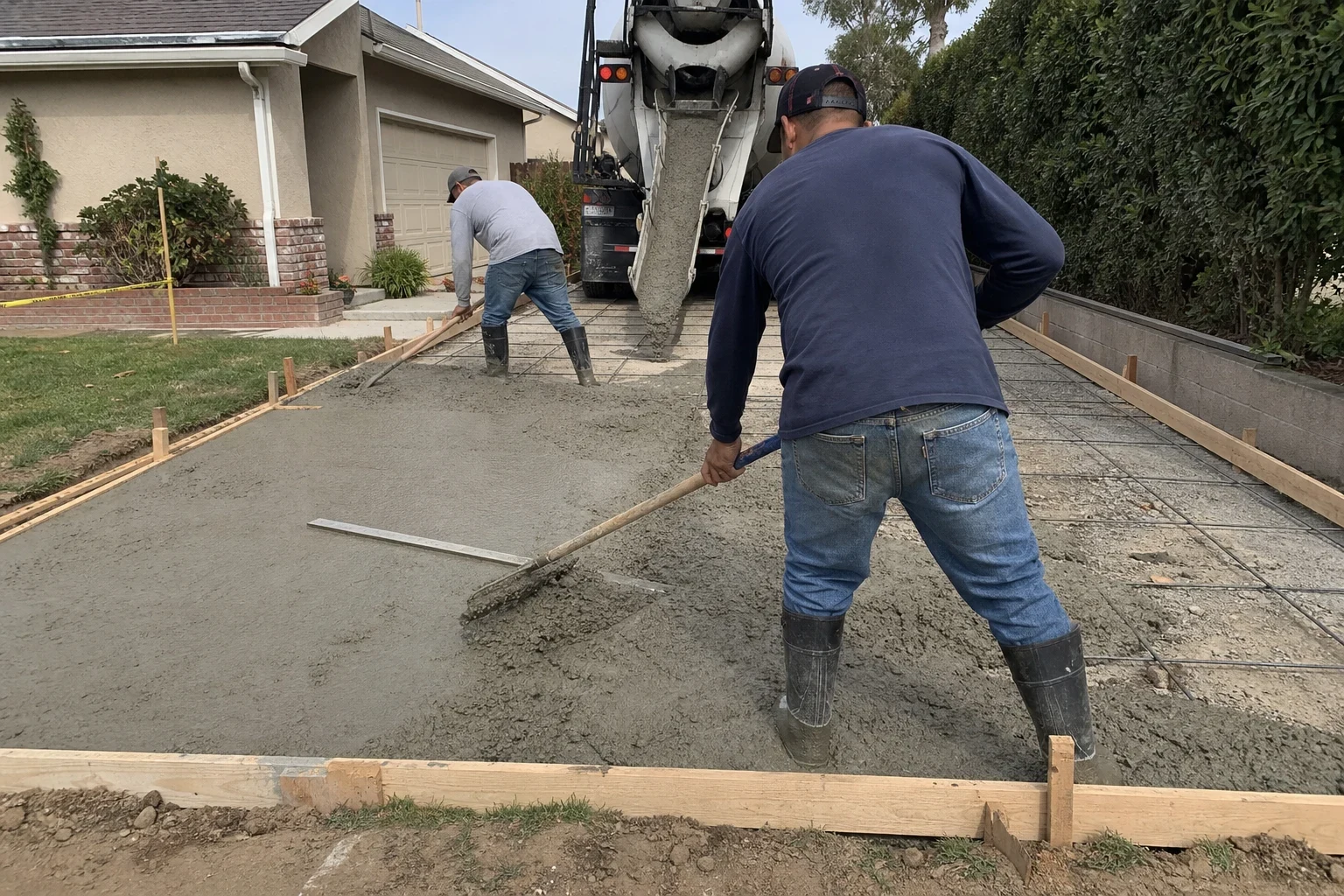
New Slabs Built From the Ground Up
On paper a slab is basic: a flat pour of concrete. In practice, most bad slabs fail because of what's under them. Loose fill, skipped compaction, missing steel or a slope that tips water toward the house. That hidden work is where we spend most of our time.
A lot of our slab calls come after a wet winter, when runoff has scooped the dirt out from under an old pad or a falling tree has snapped one in two. When that happens, we remove the old concrete and pour a new slab on a base built right. Laying fresh concrete over ground that already gave way just sets up the same failure again.
We also pour slabs where there's only dirt today: a pad for a shed or hot tub, a spot for the AC unit or water heater, or a base for a future room. For larger outdoor projects, see our Patios and Concrete Backyards pages.
What You Get With a New Slab
Tear-out and haul-away
If old concrete is in the way, we break it up and load it out. No rubble pile left beside your home.
Grading and compaction
We dig past soft dirt and roots, add base rock where the ground needs it and run a compactor over each lift. A tight base is what stops the slab from sinking later.
Forms and slope
Wood forms go in at the size you need, with a slight fall built in so rain drains off. Along the house, the slope always runs away from the wall.
Rebar or wire mesh
We set steel to match the load. A filled hot tub needs a lot more than a pad for trash cans.
Finish and control joints
You choose a broom finish for traction or a smooth troweled one. We then cut joints so shrinkage has a planned place to go.
Cleanup
We pull the forms, load the scraps and hose off the area before we head out.
Signs You Need a New Slab
It dropped after a storm
A corner or edge now sits lower than before. Most of the time, water has washed soil out from below.
Hollow edges
There's a visible gap under the edge, or a stick slides right under it. Nothing is holding that part up anymore.
Water runs toward the house
Puddles collecting against your wall after rain mean the slab has tilted the wrong way. That water can work its way into the foundation.
Cracks that aren't level
Thin surface cracks are expected. When the concrete on one side of a crack is raised above the other, the slab has broken through and shifted.
Roots pushing it up
A tree nearby can lift a slab until it rocks underfoot. We take out the concrete and trim the roots back before the new pour.
Too thin for the new job
An old thin pad was never meant for a hot tub or a heavy shed. Pouring the right thickness now saves you from a broken pad later.
How a Slab Job Runs
- 1
We look at the site
We measure, check how water drains and look at what's under the old slab if there is one. Then you get a written estimate with each part listed.
- 2
Demo and dig
We break out the old concrete, haul it away and dig to firm soil. On most small slabs this takes one day.
- 3
Base, forms and steel
We compact the base, set the forms to grade and tie in the rebar. If the city needs to inspect before the pour, we wait for that sign-off.
- 4
Pour and finish
The truck delivers, we place and level the concrete, then finish it and cut the joints. If the truck can't reach, we wheelbarrow or pump it in.
- 5
Cure and clean up
We keep the slab damp so it cures evenly, pull the forms and clean up. We'll tell you exactly when it's safe to walk on and when to load it.
What Sets the Price of a Slab
We price each slab after we've seen the spot, not from a chart. Square footage is only part of it. The ground underneath and how we reach the spot can change the number just as much, and your written estimate lists each piece on its own line.
- Size and thickness
- A bigger footprint or a deeper pour takes more concrete and more rebar. A pad built to carry a heavy load runs higher than one meant for light use.
- Removing the old concrete
- Breaking up an existing slab and hauling it off adds labor and dump fees. Thick or steel-filled slabs take longer to break out.
- Soil and base work
- If storm runoff washed out the ground or the soil is soft, we dig deeper and truck in more base rock before we can form.
- Getting to the spot
- A tight side yard or a backyard behind a fence may mean wheelbarrows or a pump instead of pouring right off the truck.
- Permits
- A slab that will sit under a structure can need a permit and an inspection. When it does, we pull it and show it in the estimate.
Concrete Slab Questions
Something not covered here? (714) 410-2675
How thick should my slab be?
Most light-duty pads, like one for an AC unit or a small patio area, run about four inches. A hot tub, a heavy shed or anything with wheels usually calls for a thicker pour and more steel. We pick the thickness from what will sit on it.
Can you pour new concrete over my old slab?
We advise against it. When an old slab has sunk or broken, the trouble is in the ground below, and a new layer on top will settle right along with it. Taking it out and building a proper base is what lasts.
How soon can I use it?
Walking on it is normally okay once a day or two has passed. Hold off roughly seven days before moving a shed or patio furniture onto it, and wait longer than that before you fill a hot tub. Before we pack up, we'll write out the dates that fit your slab.
My slab was damaged in a storm. Will insurance cover it?
That comes down to your policy and what caused the damage. We can photograph what we find and give you a line-item estimate in writing to pass to your adjuster. They make the coverage call, but you'll have clear paperwork in hand.
Will my new slab crack?
All concrete pulls in a little as it dries, so fine cracks can show up over time. We saw control joints into the surface so those cracks form along straight lines we chose. A well-built base keeps the slab from splitting and shifting.
Do you work outside Buena Park?
Yes. We pour slabs in nearby towns like Cypress, La Palma, Fullerton and Cerritos. Ask when you call and we'll tell you if you're in our area.
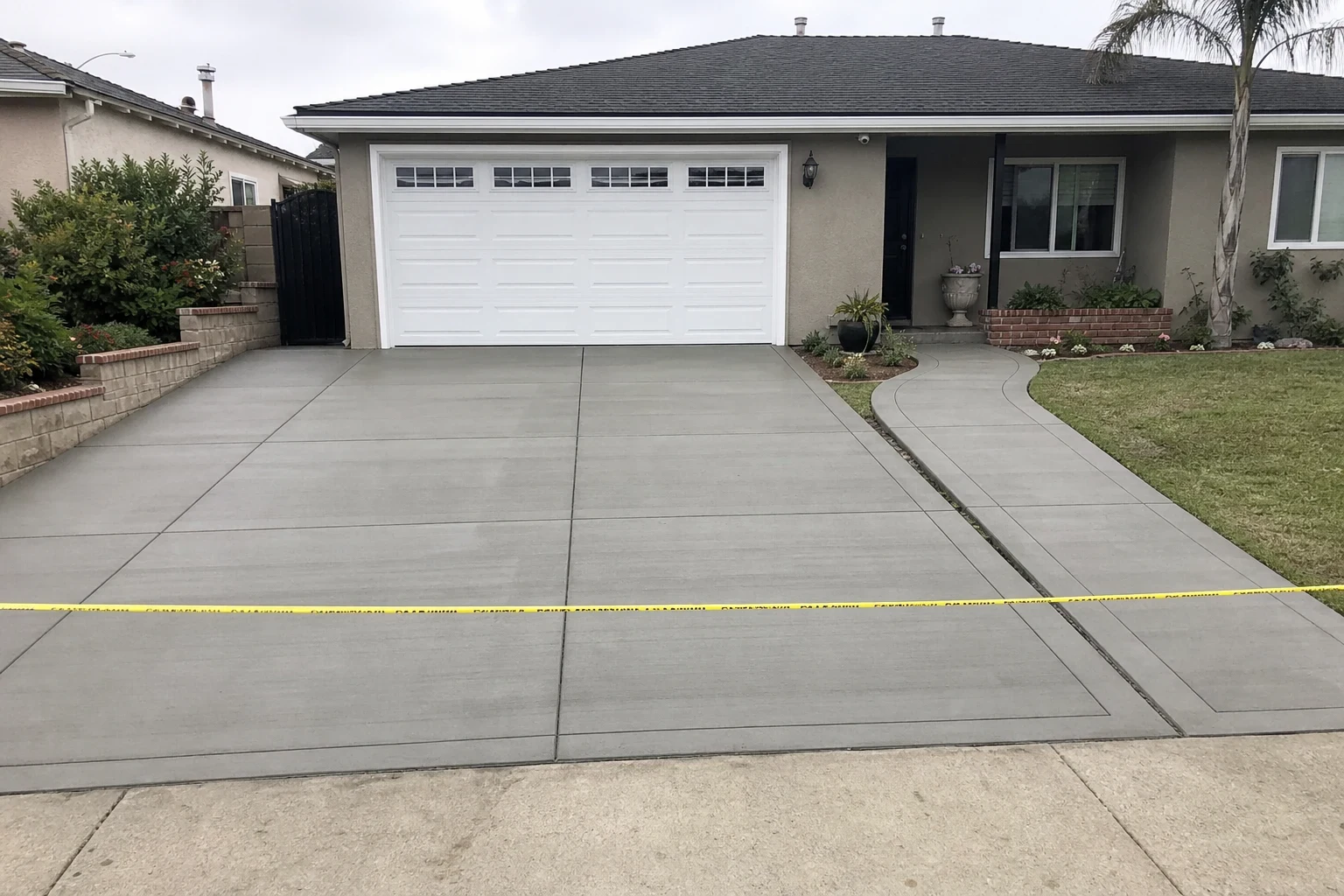
Tell Us About the Slab You Need
Let us know what's going on the slab and, if an old one is there, what happened to it. We'll come out, look at the ground and hand you a written, line-item estimate.