ServicesSteps and Stairs
Concrete Steps and Stairs in Buena Park
When a step sinks, cracks through or pulls away from the house after a hard rain, it becomes a trip hazard fast. We tear out the failed steps and pour new ones with even risers, a solid base and a finish that grips when wet.
When new steps are the right call
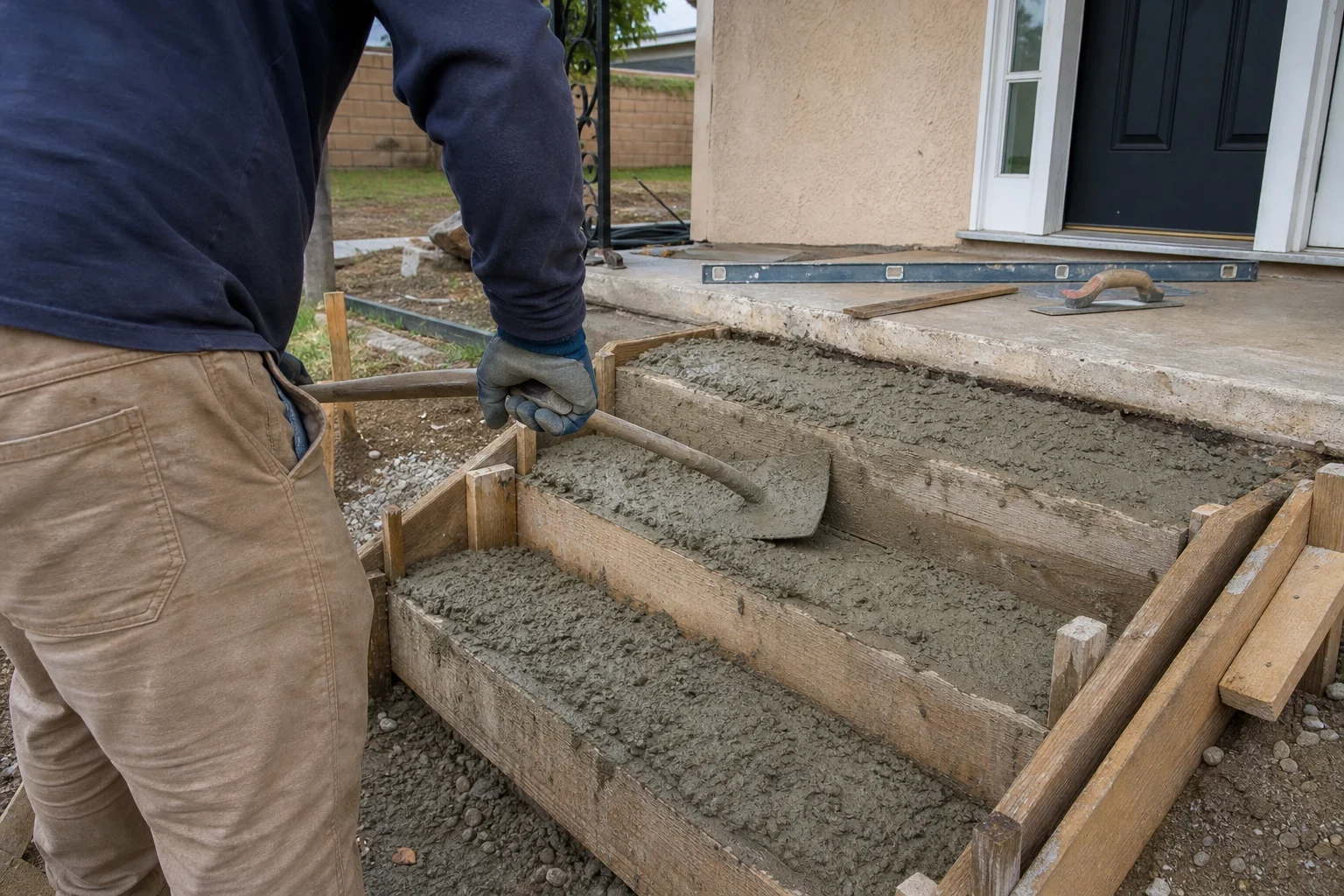
Concrete steps take more abuse than most flat work. They carry every trip in and out of your home. They sit right where roof water lands. And they are often poured on loose fill that was never packed down well. When the soil under them washes out or swells, the whole block shifts. Patching a step like that rarely holds. Removing it and pouring new steps on a proper base does.
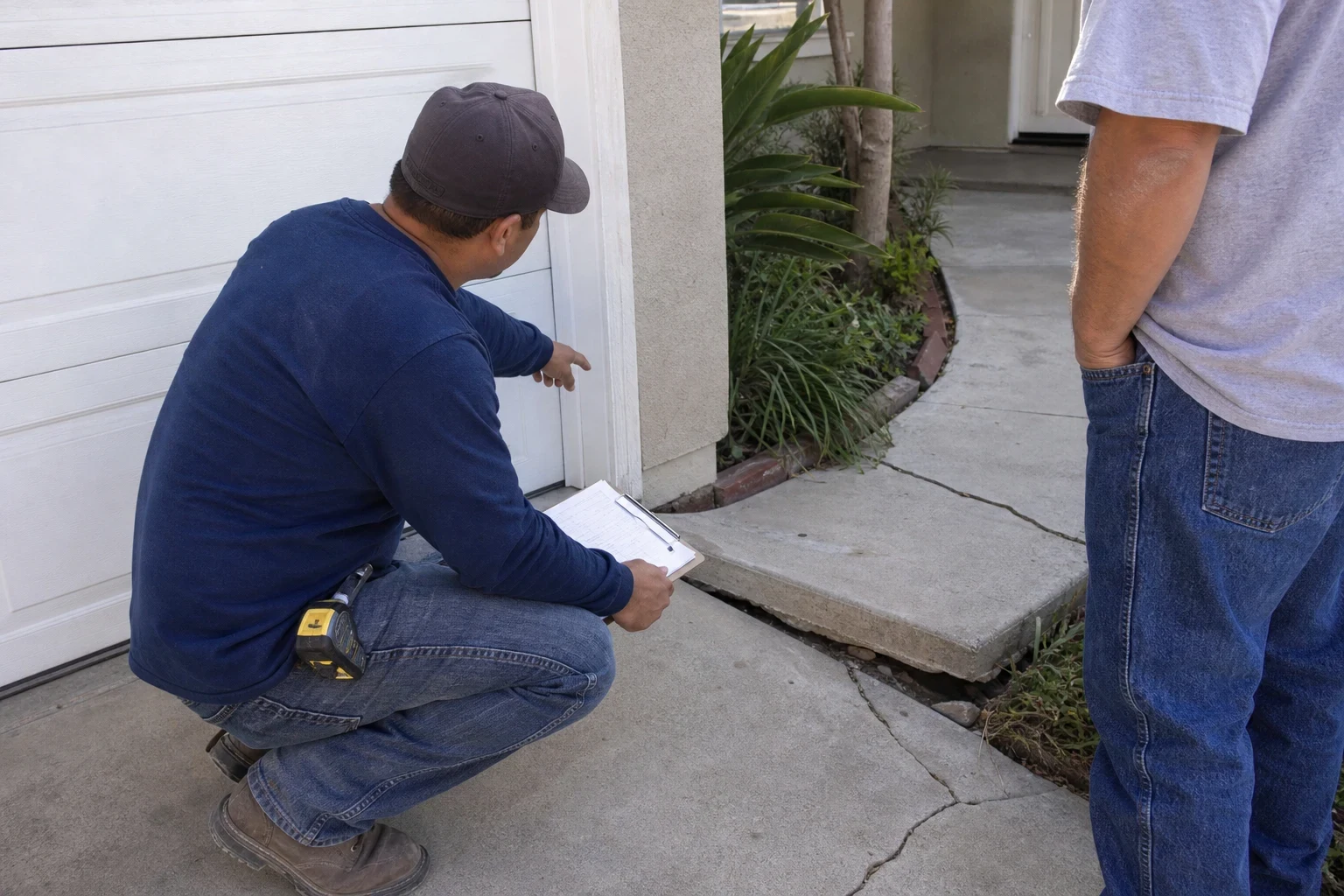
After a storm or a sudden failure, think about safety first. If a step has dropped or a corner has broken off, block it off and use another door until we can take a look. Then give us a call. We come out, measure, check what is under the old concrete and tell you plainly what it will take.
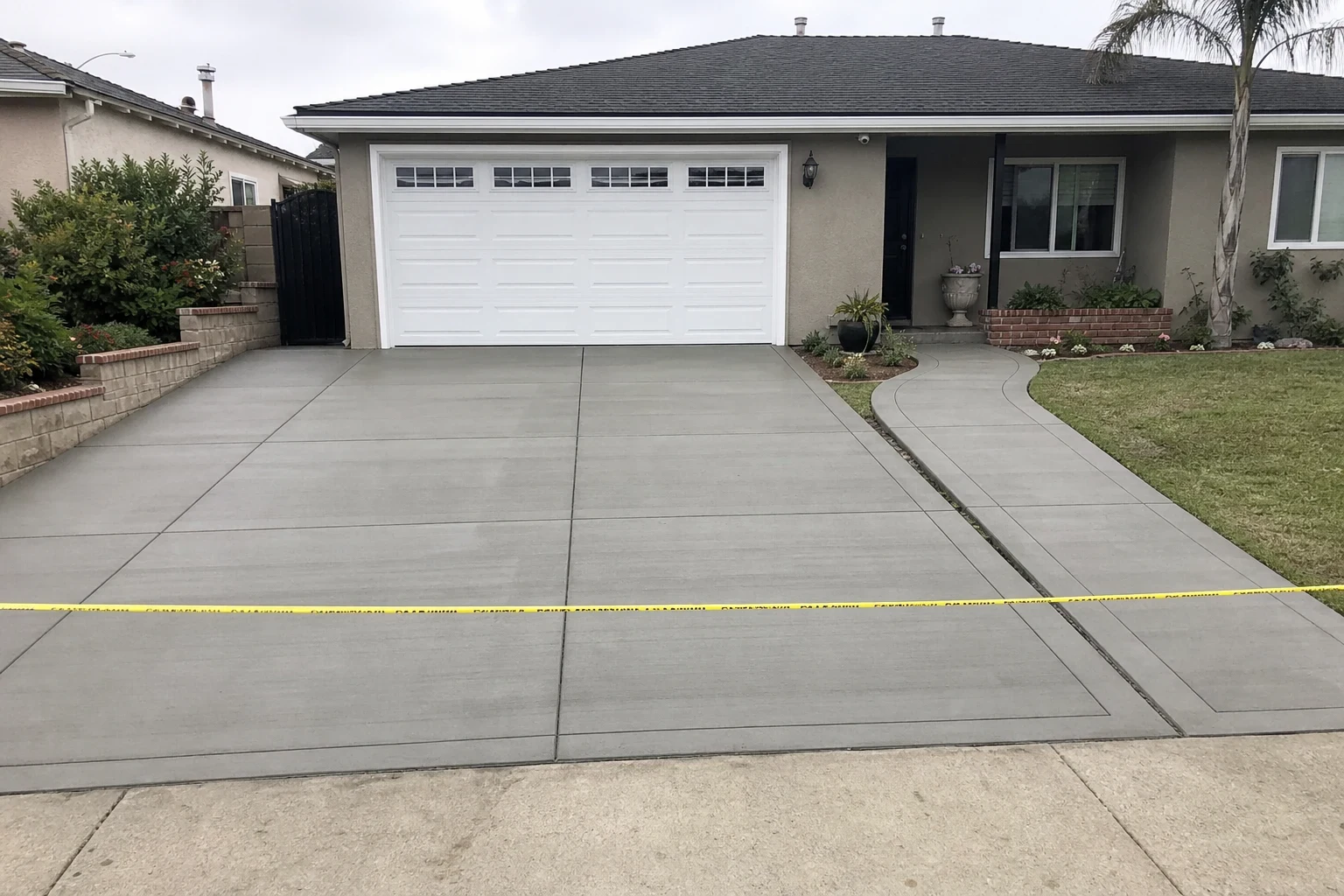
We build front entry steps, back door and patio steps, garage landings and longer stair runs on sloped yards. If the walk leading up to the steps is failing too, we can quote it alongside our walkways and sidewalks work so it all goes in together.
What you get with new steps
- Removal of the old steps
- The failed concrete gets broken up and loaded out, with a clean saw cut where the steps meet your walk or slab. Your side yard doesn't become a rubble pile.
- Base and drainage check
- We dig down to firm soil, then add base rock and pack it tight. We also watch where roof and yard water ends up. If a downspout dumps right at the steps, we show you so the new ones don't wash out the same way.
- Forms built to code
- Each riser comes out the same height and inside the code limit, and each tread is deep enough for a whole foot. Uneven steps are what trip people up, so we check every one before the pour.
- Steel and ties to the house
- Rebar goes through the steps. Where it makes sense we drill and dowel into the existing slab or foundation, so the new steps hold their spot instead of creeping away from the door.
- A finish that grips
- Broom finish is our standard, and it holds traction well in the rain. Rounded edges are an option, or we can match the steps to stamped concrete on a patio beside them.
Signs your steps need to come out
A step has sunk or tilted
If the top step now sits below the door threshold or leans toward the yard, the base under it has failed. It will keep moving.
A gap at the house
A crack you can fit a finger into between the steps and the wall means the steps are pulling away. Water runs into that gap and makes it worse with every storm.
Cracks all the way through
Hairline surface cracks are common. A crack that runs through the whole step, with one side higher than the other, is a different problem.
Risers that don't match
When one step is noticeably taller or shorter than the others, people catch a toe. This is often how older steps were poured, not just a sign of damage.
Water sitting on the treads
Treads should shed water. Puddles mean the steps have tipped back toward the house, which sends water toward your foundation too.
What moves the price
Steps are small, but they take more form work and hand finishing per square foot than a driveway. We give you a written line-item estimate after we see the site, so you know what each part covers before we start. These are the things that change the number.
Number of risers and width
A two-step back door landing is a short job. A wide front entry or a long run down a slope needs more concrete, more forms and more steel.
Demolition and access
Thick old steps with steel inside take longer to break out. Tight spots where we can't bring equipment close mean more hand work.
What's underneath
Soft or washed-out soil has to be dug out and replaced with compacted base. We won't know the full extent until the old concrete is off, and we tell you right away if it's more than expected.
Finish and extras
Stamped or colored finishes, rounded edges and handrail sleeves all add time on the day of the pour.
Permit and inspection
Some step jobs need a permit and some don't. If yours does, the fee and inspection visit are listed on the estimate.
How a step job runs
- 1
Look and measure
We check the old steps, the soil under them, the door height and the drainage. We take photos of what we find so you can see it too.
- 2
Written estimate and permit
You get a written line-item estimate. If the city building department needs a permit for your steps, we pull it and schedule the inspection.
- 3
Demo and forms
Tear-out, base work, steel and forms usually happen in one day. We keep a path open or tell you ahead of time which door to use.
- 4
The pour and finish
We pour, shape the edges and broom the treads, then strip the forms once the concrete has set up enough to hold its shape.
- 5
Cure and first use
Foot traffic is fine after a day or two. We'll tell you when it's safe to set heavy pots or furniture back on the landing.
Questions about concrete steps
Can you just patch my cracked step?
We don't do patch work. Our job is removing failed steps and pouring new ones. When we come out, we'll tell you straight whether your steps need to come out now or can wait a while.
Do I need a permit for new steps?
It depends on the height, the size and whether the steps serve a main entry. We check with the city before we start. If a permit is needed, we handle it and are on site for the inspection.
How long before we can use the steps?
Most people can walk on new steps after a day or two. Concrete keeps getting stronger for weeks, so hold off on rolling heavy loads up them for about a week. We'll give you plain dates before we leave.
A storm damaged our steps. Will insurance cover it?
Sometimes, depending on what caused it and your policy. Take photos before anything is moved. We can give you our written estimate and photos of what we find to send in. Your insurer decides what is covered.
Can you make the steps wider or change the layout?
Yes. Replacement is a good time to widen a narrow entry, add a landing at the door or turn the run to suit the yard. We'll sketch it out with you during the first visit.
Will the new steps match the walk next to them?
New concrete is lighter than old concrete at first and darkens some over time. We match the finish texture as close as we can. An exact color match is not something we can promise.
Steps feeling loose or uneven?
Tell us what's going on with your steps and we'll set a time to come out, measure and look at the base. You'll get a written estimate and a straight answer.