ServicesConcrete Side Yards
Concrete Side Yards in Buena Park
We tear out mud, weeds and broken pavers and pour a new concrete side yard that sheds water away from your home. If the last storm left puddles against the wall or a soggy path to the trash cans, we can plan the fix and set a pour date.
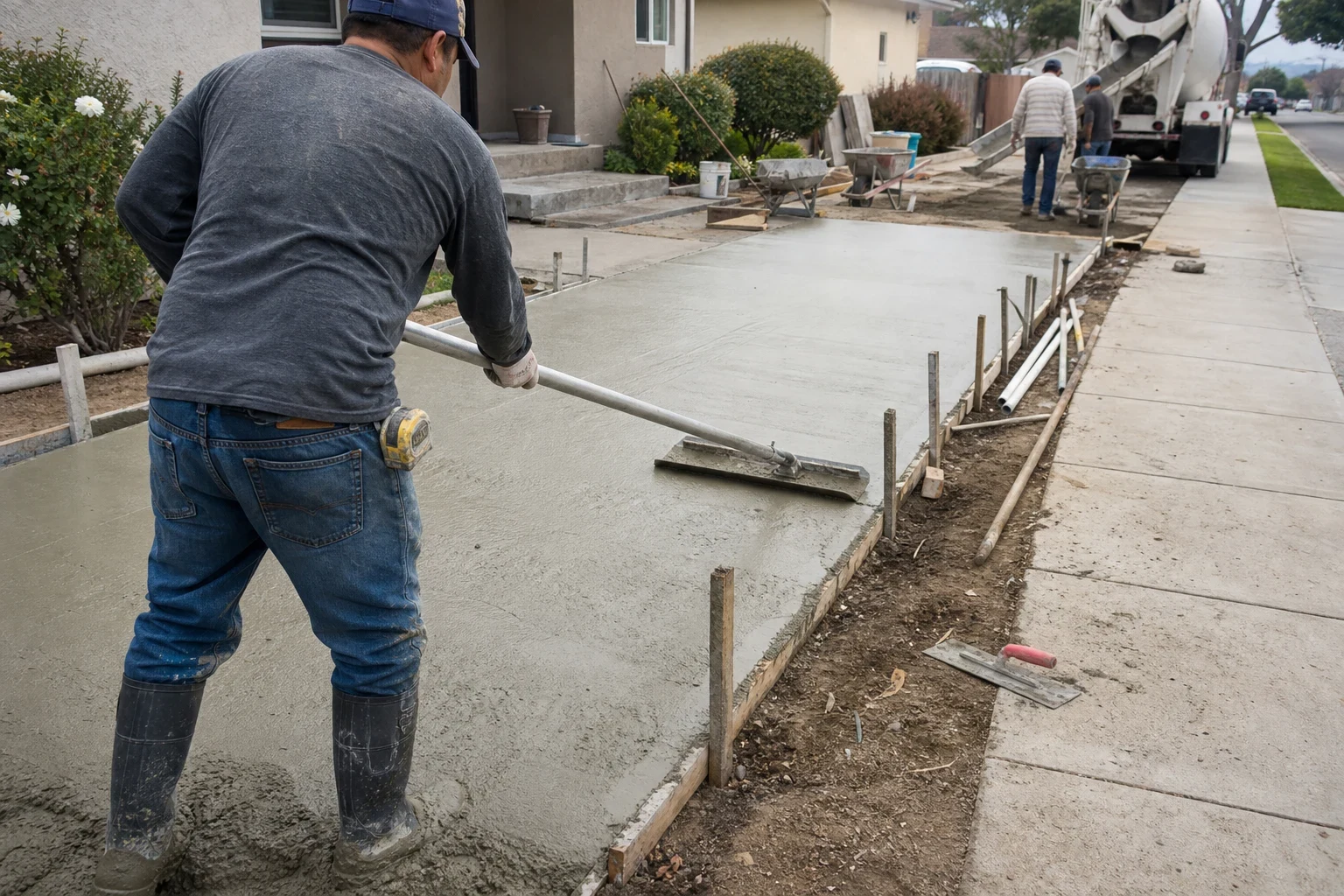
What a concrete side yard does for you
A side yard is the narrow run between your house and the fence. It takes roof runoff, AC drips and foot traffic. When it is dirt or old gravel, water sits there and soaks in next to the foundation.
We pour a slab that pitches away from the house and carries water to the street, a drain or the yard. You get a clean path for bins, bikes and the gardener, and fewer weeds to pull.
After a hard rain, a lot of folks call us because they finally saw where the water goes. That is a good time to call. We look at the low spots while they are still easy to see and plan the slope from there.
What the work includes
- Tear-out and haul-off
- We remove old concrete, pavers, gravel, weed cloth and roots. All of it leaves the property in our trucks.
- Grading for slope
- We set the grade so the finished slab falls away from the house, usually about a quarter inch per foot. That small pitch is what keeps water off the stucco and out of the crawl space.
- Compacted base
- We spread and compact base rock so the slab sits on firm ground, not loose fill. Soft spots get dug out first.
- Drains and downspout tie-ins
- Where water has nowhere to go, we can set a channel drain or area drains and connect downspouts so roof water runs under the slab instead of across it.
- Steel, joints and finish
- We place rebar or wire, cut control joints so cracks land where we want them, and give the surface a broom finish for grip when it is wet.
- Clean edges at the wall
- We keep the slab below the weep screed on stucco walls and leave a clean gap at the foundation, so you do not trap moisture behind the plaster.
Signs your side yard needs concrete
Water stands after rain
Puddles that last a day or more next to the house mean the ground slopes the wrong way. That water ends up against your foundation.
Mud tracked into the house
If every trip to the trash cans in the winter means muddy shoes, a hard surface fixes that for good.
Old slab is sunk or tilted toward the house
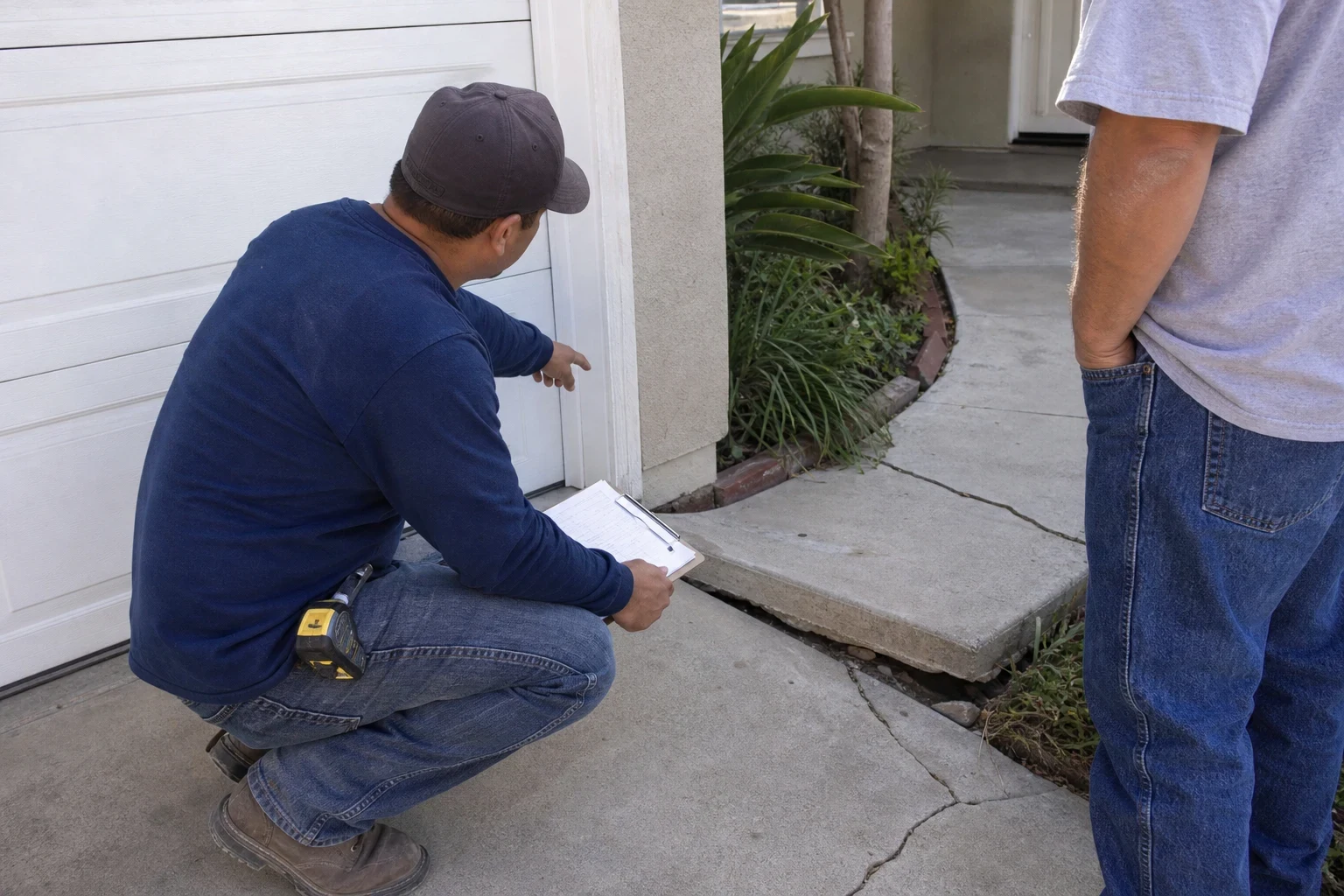
Settled concrete can send water right at the wall. Patching will not change the slope, so we take it out and pour new.
Stains or cracks low on the stucco
Dark lines, flaking paint or efflorescence near the bottom of the wall often point to wet soil sitting against it.
Weeds you fight every season
Dirt side yards grow weeds fast after the winter rains. Concrete ends that chore.
What moves the price
Side yards are long and narrow, so access often matters as much as size. We price after we see the space and the drainage, and we list every part of the job so nothing shows up later.
Square footage and thickness
Length times width sets the concrete amount. A path for bins can be thinner than a strip where you park a trailer or boat.
Access to the work
A tight gate or no gate at all means more hand work or a pump. Easy access from the driveway keeps labor down.
What comes out first
Bare dirt is quick. Old concrete, buried pavers or heavy roots take more time and more hauling.
Drainage work
Channel drains, area drains and downspout lines add materials and trenching, but they are often the whole reason for the job.
Finish choice
A broom finish is the simplest. A stamped or colored finish costs more, and we can talk through that on our Stamped Concrete page.
How the job goes
- 1
Look at the site
We walk the side yard with you, check where water runs and note downspouts, gas meters, AC units and gates. We measure the length and width and explain what the slope has to do.
- 2
Written quote by phone and on paper
We go over the price on the phone and give you a written estimate that lists tear-out, base, drains and concrete as separate lines. If anything needs a permit, we tell you up front.
- 3
Demo and prep day
We remove the old surface, grade, compact the base and set forms and drains. Narrow side yards often mean wheelbarrows or a small loader, and we protect fences and walls as we go.
- 4
Pour and finish
We pour, screed to the planned slope, cut joints and broom the surface. We pull forms and clean up when the concrete is ready.
- 5
Cure and use
Keep foot traffic off for a day or so and heavy loads off for about a week. We tell you exactly when it is safe to roll the bins back.
Side yard questions we hear
Will concrete fix the water problem on the side of my house?
It will if the slope and drainage are right, which is why we start there. A slab poured flat or toward the wall can make things worse. We plan where every bit of water goes before we pour.
Should I wait until after rainy season to pour?
Not always. We can pour in the winter between storms and keep an eye on the forecast. Seeing the problem right after a rain actually helps us set the grade.
Can you pour around my AC unit and gas meter?
Yes. We form around equipment and leave proper clearance at the meter. If the AC pad is cracked or low, we can replace it as part of the same pour.
How much of my yard will be torn up?
Mostly just the side yard itself and the path to get material in. We lay down protection where we roll equipment and clean up the street and driveway before we leave.
Can the side yard match my driveway or patio?
We can match a plain broom finish closely. Exact color on older concrete is harder to match, so we talk about that before the pour. If you are planning a new patio or walkway too, doing them together can save a separate mobilization.
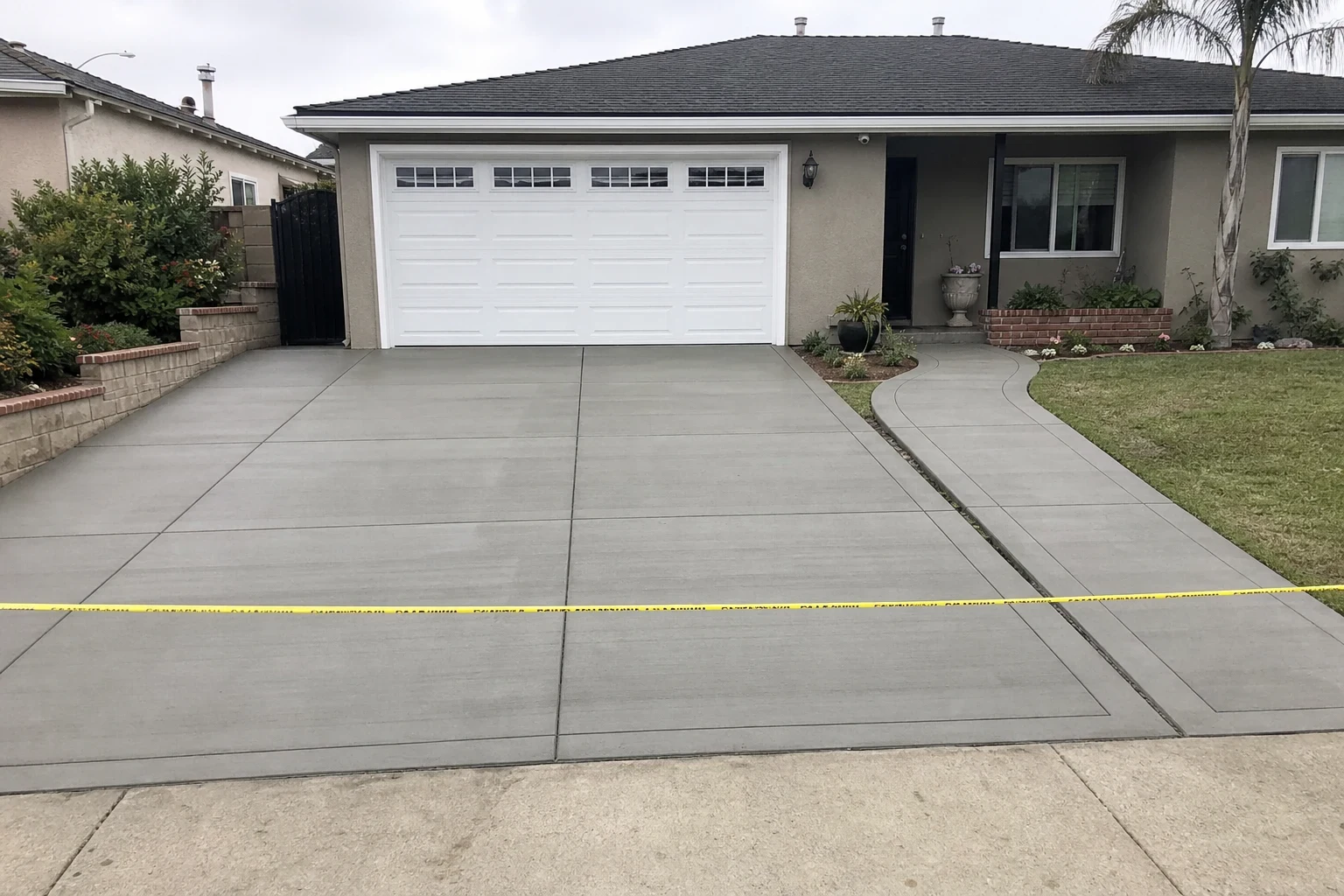
Get the side of your house dry and usable
Tell us what you see after a rain and how you use the space. We will set up a visit to measure, check the drainage and go over a clear, written price.