ServicesDriveways
Driveways in Buena Park
When a driveway is heaved, sunken or broken up after a hard rain, patching it again rarely holds. We tear out the old slab, fix the base underneath and pour a new driveway that drains the right way and handles your cars for years.
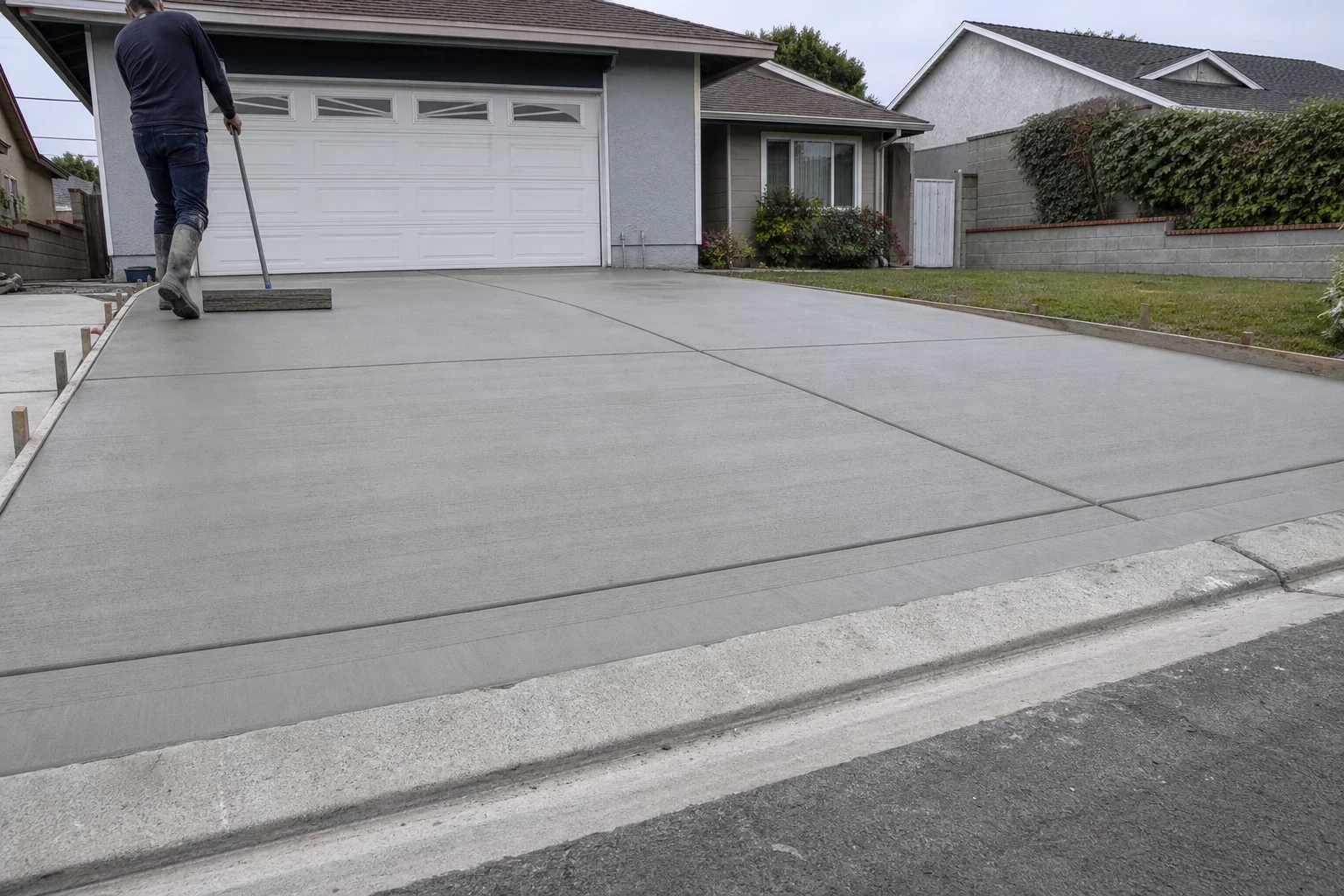
A new driveway, built from the ground up
Most driveway trouble starts under the concrete, not on top of it. Water gets under the slab, the soil softens or washes out, and the concrete cracks where it lost support. A new pour on the same weak base will fail the same way.
So we start at the dirt. We dig out the old driveway, check what the soil is doing, add and compact base rock, then set forms and steel before any concrete shows up. The result is a driveway that sits flat, sheds water toward the street and keeps it away from your garage and foundation.
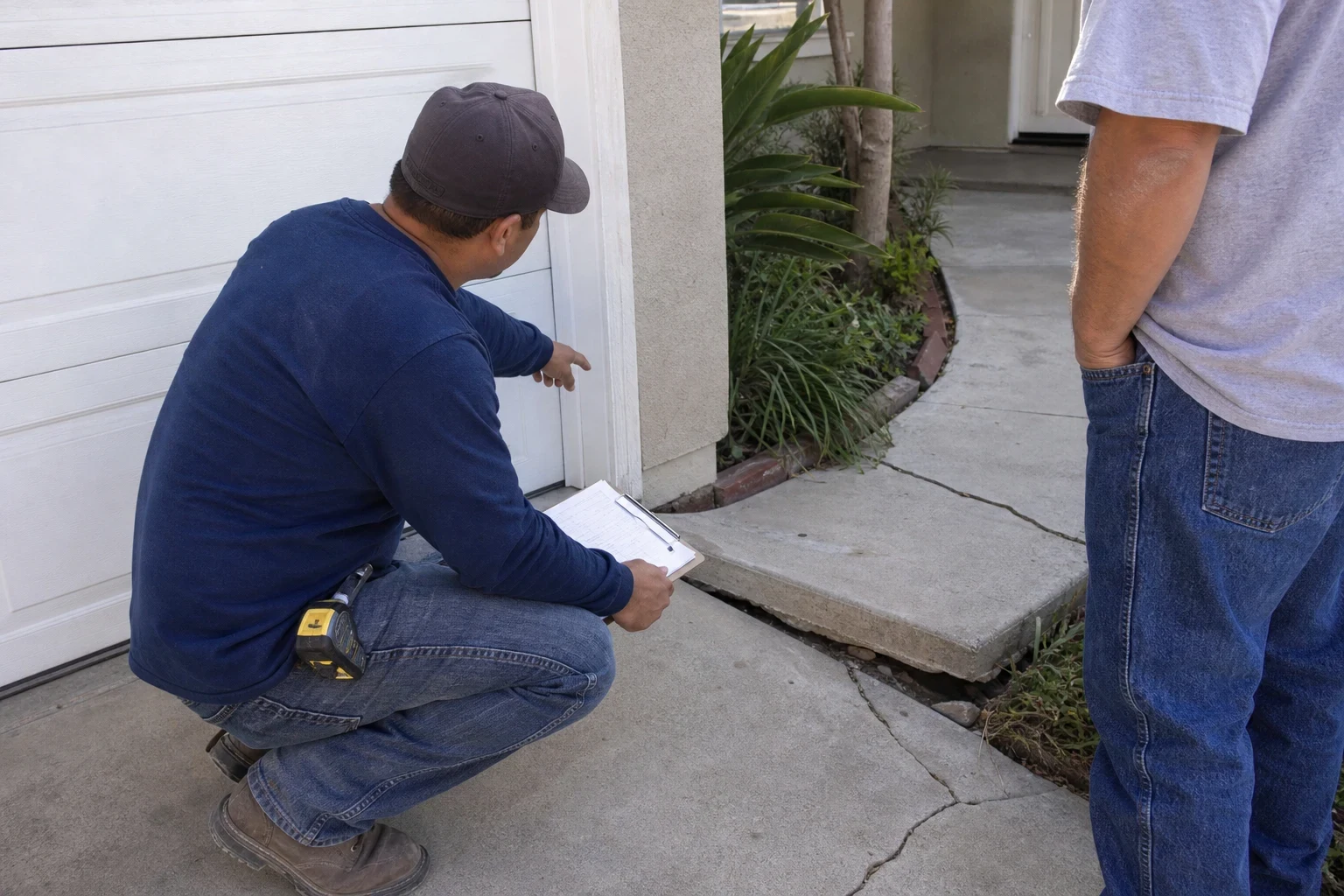
After a big storm or a sudden failure, you want a clear answer fast. We come out, look at it with you, show you photos of what we find and tell you plainly whether it needs to come out now or can wait.
What's part of every driveway job
- Demo and hauling
- We break up your old concrete or asphalt and truck it off the property. No leftover rubble sitting on your lawn.
- Grading and base rock
- We shape the soil, spread base rock and pack it down one layer at a time. More than anything else, this decides how long the driveway holds up.
- Rebar set at the right height
- We prop the rebar up off the ground on small supports so it ends up mid-depth in the concrete. That's where steel actually carries the load, instead of resting on dirt doing nothing.
- Proper fall for drainage
- Our forms are set so rain runs out toward the street. If water used to collect near your garage, we correct that slope.
- Joints and surface
- We saw joints into the slab so any cracking follows clean, planned lines. Most driveways get a broom finish for traction, and stamped concrete is available if you'd like a pattern or color.
- Permit for street work
- When the job includes the approach or the sidewalk at the curb, the city usually requires a permit. We take care of pulling it and setting up the inspection.
Signs your driveway needs to be replaced
Sections that sank or lifted
If one slab sits an inch above the next, the base has moved. That trip edge will keep getting worse.
Water pooling after rain
Puddles that sit for a day mean the slope is wrong or the slab has settled. That water is working its way under the concrete and toward your home.
Cracks that keep spreading
Hairline cracks are normal. Wide cracks that branch out, or broken corners that come loose, point to a failed base.
Soil washed out at the edges
After a heavy storm you may see gaps or hollow spots along the sides. Once the edge loses support, the concrete breaks off under tire weight.
Tree roots pushing it up
Roots lift and split the slab. We remove the old concrete, deal with the roots in that area and pour new.
How a driveway job runs
- 1
Look and measure
We come out, measure the driveway, check the slope and look at the damage. You get photos and a written estimate with each part of the job listed.
- 2
Demo day
We cut a clean line at the garage and street, break out the old slab and haul it off. This usually takes a day for a typical driveway.
- 3
Base, forms and steel
We grade and compact the base, set forms for the right slope and tie the rebar. If a permit is needed, the inspection happens before the pour.
- 4
Pour and finish
The concrete goes in, we level it, finish the surface and cut the joints. We clean up the street and walks before we leave.
- 5
Cure time
Stay off it on foot for a day or two. Wait about a week before driving on it, and longer for heavy trucks.
What sets the price of a new driveway
We price each driveway after we've walked it with you. Square footage is part of it, but the soil under the old slab and how we get equipment in count just as much. Before any work starts, you get a written estimate with every part of the job on its own line.
- Square footage and slab depth
- A bigger driveway takes more concrete, more rebar and more hours to place and finish. If you park a heavy truck or work van, we may pour it thicker, and that adds material.
- The old surface
- Breaking out a thick slab or an old asphalt driveway takes longer than lifting out thin, cracked pieces. It also means more truckloads to haul away.
- Soil and base under the slab
- When a storm has washed soil out or left the ground soft, we have to bring in extra base rock. Compacting it right takes more passes and more time.
- Getting in and the street approach
- A narrow side gate or tight spot slows the crew down. Work at the approach by the street usually needs a city permit, which brings a fee and an inspection.
- Surface finish
- A broom finish is the most budget-friendly choice. Color or a stamped pattern costs more because of the extra material and labor.
Common driveway questions
Something not covered here? (714) 410-2675
Is it OK to pour a new layer on top of the old driveway?
It's not something we'd do. A thin overlay picks up every crack and low spot in the slab below, so the problems come right back. It also raises the surface, which causes trouble at the garage door and at the street. Taking out the old concrete and rebuilding the base gives you a driveway that holds up.
A storm damaged my driveway. Is that covered by insurance?
It depends on your policy and on what actually caused the damage. We can hand you photos of what we found and a written estimate that spells out the work. The decision on coverage belongs to your insurance company, not to us.
How long until I can park in my driveway again?
Figure on roughly a week to ten days from tear-out to parking. Demo and the pour go quickly; most of that time is the concrete curing. We give you the schedule before we start so you can line up street parking.
Do you pour driveways outside Buena Park?
We do. We also work in nearby cities such as Fullerton, Cypress, La Palma and Cerritos. Give us a call and let us know where your home is.
Is my new driveway going to crack?
Any concrete can form small cracks as it cures and over the years. We saw control joints into the slab so those cracks run along straight lines where you won't notice them much. A well-compacted base and proper steel keep it from breaking apart like the old one did.
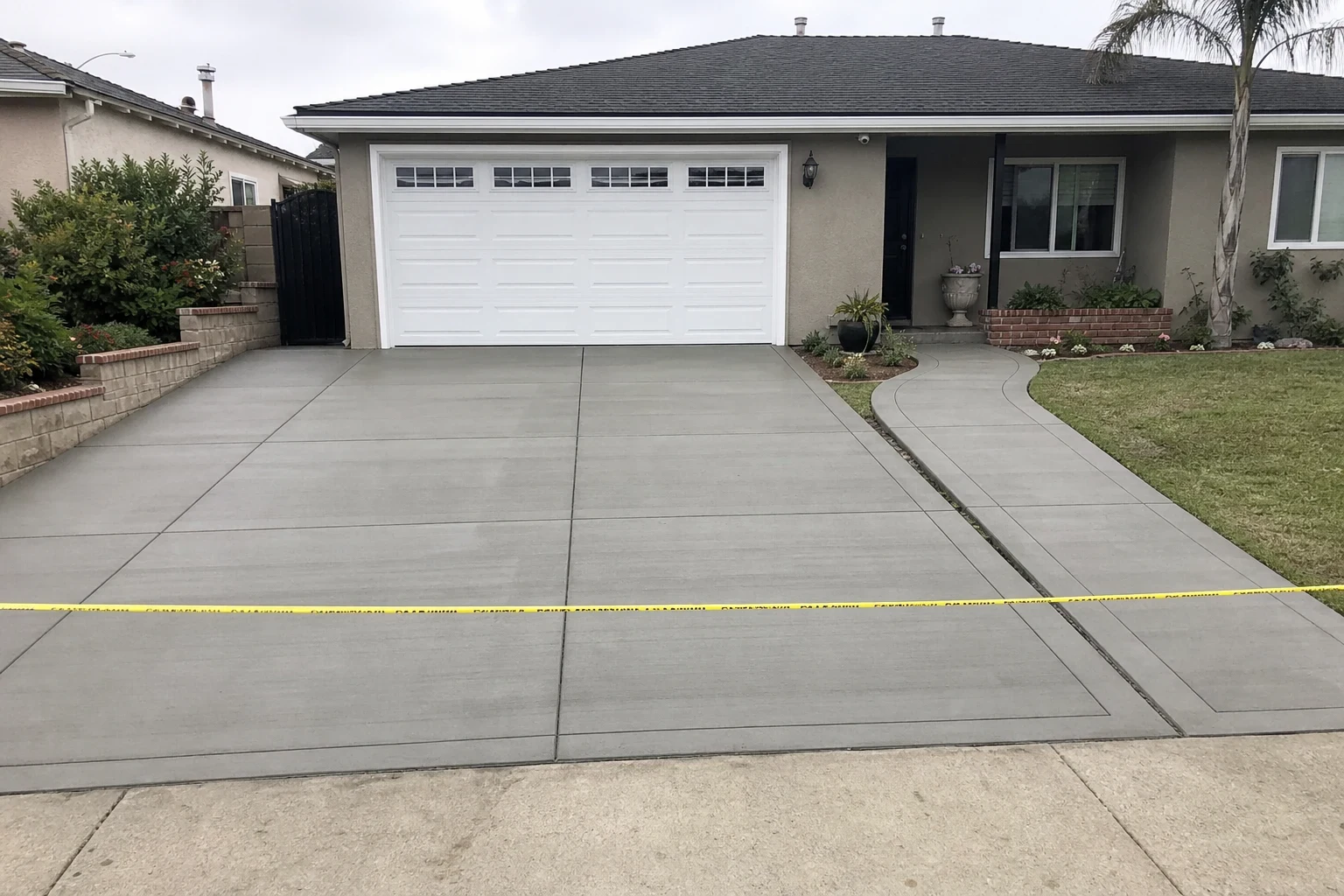
Let's look at your driveway
Tell us what happened and what you see. We'll set a time to come measure, show you what's going on underneath and give you a written estimate.