ServicesPatios
Concrete Patios in Buena Park
We tear out tired or storm-damaged patios and pour new ones on a properly compacted base. Your new slab gets the right slope, clean control joints and a finish you pick, so rain runs off and you get a flat, solid space behind your home.
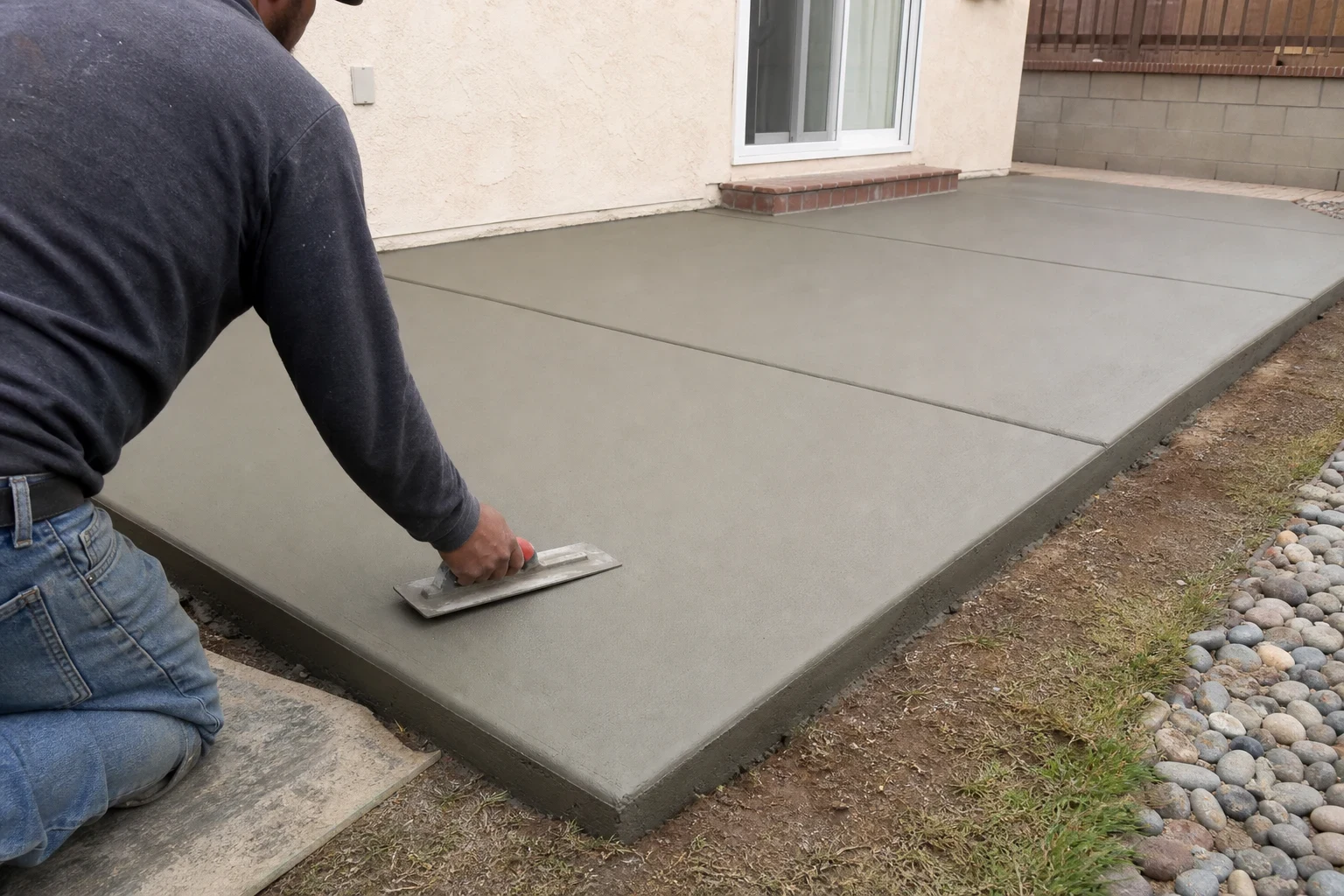
A new patio, done from the ground up
A patio is a slab you live on. You set furniture on it, walk it barefoot and hose it off. When it cracks, sinks or tips toward your house, patching it rarely lasts. We pour new patios, and we start with what is under the concrete, because that is where most patios fail.
Our winter storms can soak the soil under an old slab for days. The clay common in this part of Orange County swells when wet and shrinks when it dries. Over time that movement breaks up a thin slab poured on a loose base. If a hard rain left your patio heaved, washed out at the edges or holding water against the house, that is usually the time to replace it.
We keep it simple. We look at what you have, tell you plainly whether it needs to come out, and give you a written estimate with each line spelled out.
What goes into one of our patios
- Demolition and haul-off
- When there is an old slab in the way, we break it up and load every piece onto our truck. The broken concrete leaves with us the same day it comes out.
- Grading and a compacted base
- We dig down to the right depth, spread crushed rock and pack it in layers with a plate compactor. That firm bed is what stops the slab from sinking or rocking once the next wet season rolls in.
- Slope that moves water away
- Our forms are set so the finished surface drops gently away from your home. Rain heads out to the yard or into a drain, not back toward the foundation or the slider.
- Steel reinforcement
- Rebar or wire mesh goes into the slab before the pour. It helps the concrete stay in one piece when the ground underneath shifts.
- Control joints and finish
- We tool or saw joints in planned spots so any cracking follows a straight line. You pick the surface: a broom finish for traction, a smooth troweled top, or something decorative. Our stamped concrete page explains the pattern options.
- Cleanup
- Forms, stakes and scraps get pulled and hauled out. We hose off the area so it is clean when we hand it over.
How to tell your patio should come out
Puddles against the back wall
After a rain, look at the spot where the slab meets your home. If water sits there by the wall or the back door, the patio has settled or was poured without enough fall. That water can find its way under the house.
A section that dropped or leans
One part of the patio sitting lower after a storm usually means the rock and soil beneath it washed away or were never packed well. The surface is just showing you a problem in the ground.
Cracks that keep widening
Fine hairlines on top are normal for most concrete. A gap you can fit a pencil tip into, or a crack where one side stands taller than the other, tells you the slab has broken clean through.
A ledge pushed up by roots
A tree growing nearby can lift the slab from below and leave a lip that trips people. We remove the old concrete and set out the new patio so the tree has room.
A top that flakes and pits
If the surface sheds chips or feels sandy when you walk on it, it has worn out. Paint or sealer on concrete like that tends to peel within a season or two.
How a patio job runs
- 1
Look and measure
We walk the area with you, check drainage and talk about size, shape and finish. You get a written estimate that lists demo, base, concrete and finish separately.
- 2
Demo and prep
We remove the old slab, grade the soil, compact the base and set forms and steel. If your project needs a permit, we pull it before we start.
- 3
Pour and finish
Pour day usually takes most of a day. We place, level and finish the concrete, then cut or tool the joints while it is still workable.
- 4
Cure and hand-off
We strip the forms once the slab sets and clean up. You can walk on it after about a day. Wait about a week before setting heavy furniture or a grill on it.
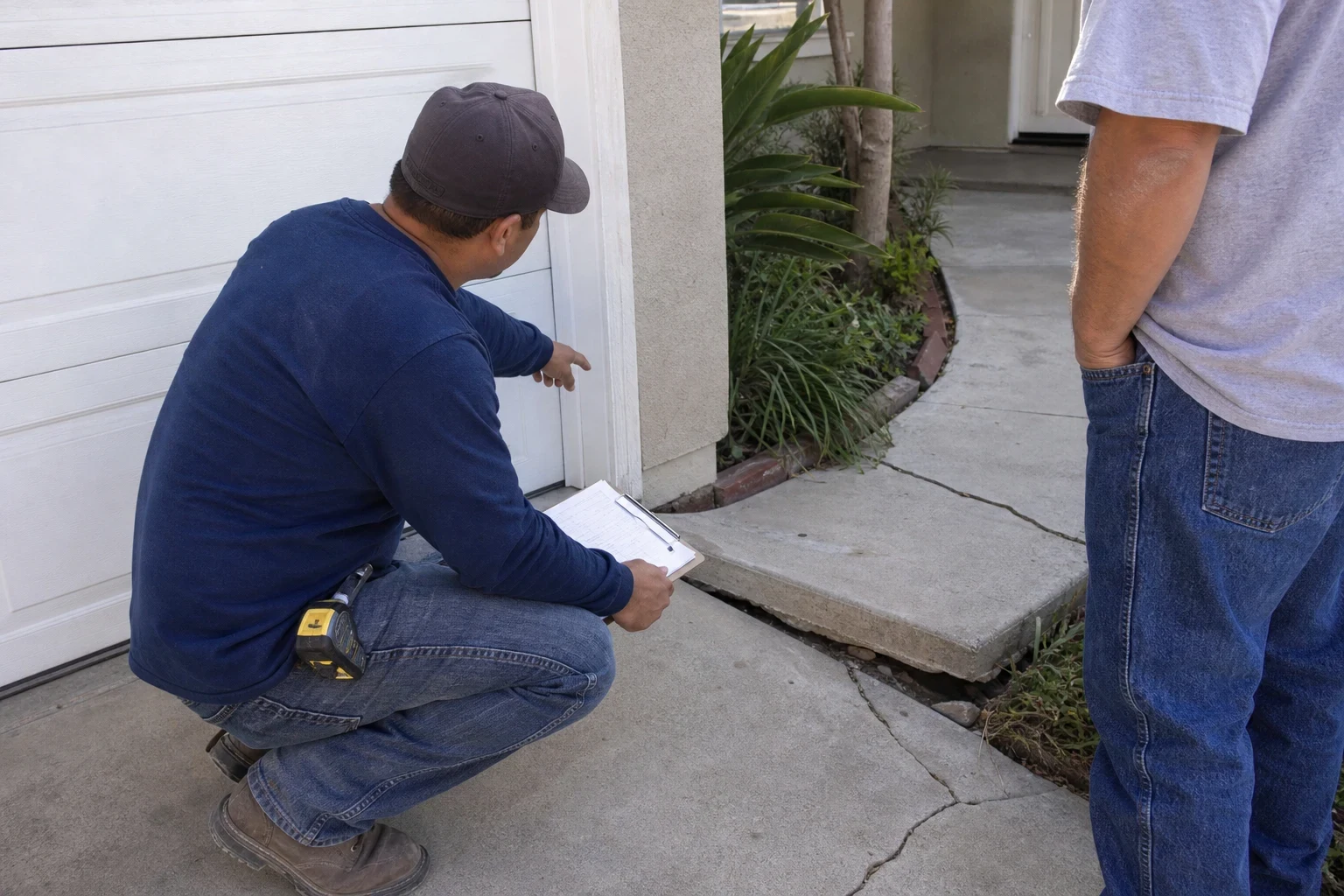
What sets the price of a patio
Every patio is priced on its own. The size matters, but so does what we find under the old slab and how easy it is to get concrete to your backyard. We go over each of these with you before any work starts.
- Size and thickness
- More square footage means more concrete, steel and labor. A thicker slab costs more but holds up better under heavy planters or an outdoor kitchen.
- Tear-out and soil
- Removing an old patio adds demo and haul-off. Soft, wet or washed-out soil may need extra base rock.
- Access
- If a truck can reach the forms, we chute the concrete in. A tight side yard may mean pumping it or wheeling it back, which adds time.
- Finish choice
- A broom finish is the simplest. Color, stamping or exposed aggregate take more material and more hands on pour day.
- Drainage work
- Adding a drain line or reshaping the yard to move water away from your home adds to the job.
Patio questions we hear
Something not covered here? (714) 410-2675
Can you pour over my old patio?
We generally do not. Pouring over a cracked or sunken slab carries the same problems into the new one and raises the height near your doors. Taking it out lets us fix the base and the slope.
How soon after a storm can you start?
We need the ground to dry out before we compact a base or pour. After a heavy rain, that may be a few days of dry weather. We will look at your patio and schedule the work for when the soil is ready.
Will my new patio crack?
Concrete can still get small hairline cracks. The control joints are there so it cracks along straight lines where you expect it. A compacted base and steel keep cracks from spreading or shifting.
Can you make the patio bigger than the old one?
Yes. Many homeowners extend the patio while the old slab is out. We can also tie it into a walkway or plan a larger layout, which our concrete backyards page covers.
Do I need to be home on pour day?
Not the whole day. We need clear access to the backyard and a way to get through the side gate. We will walk you through the finished slab before we leave.
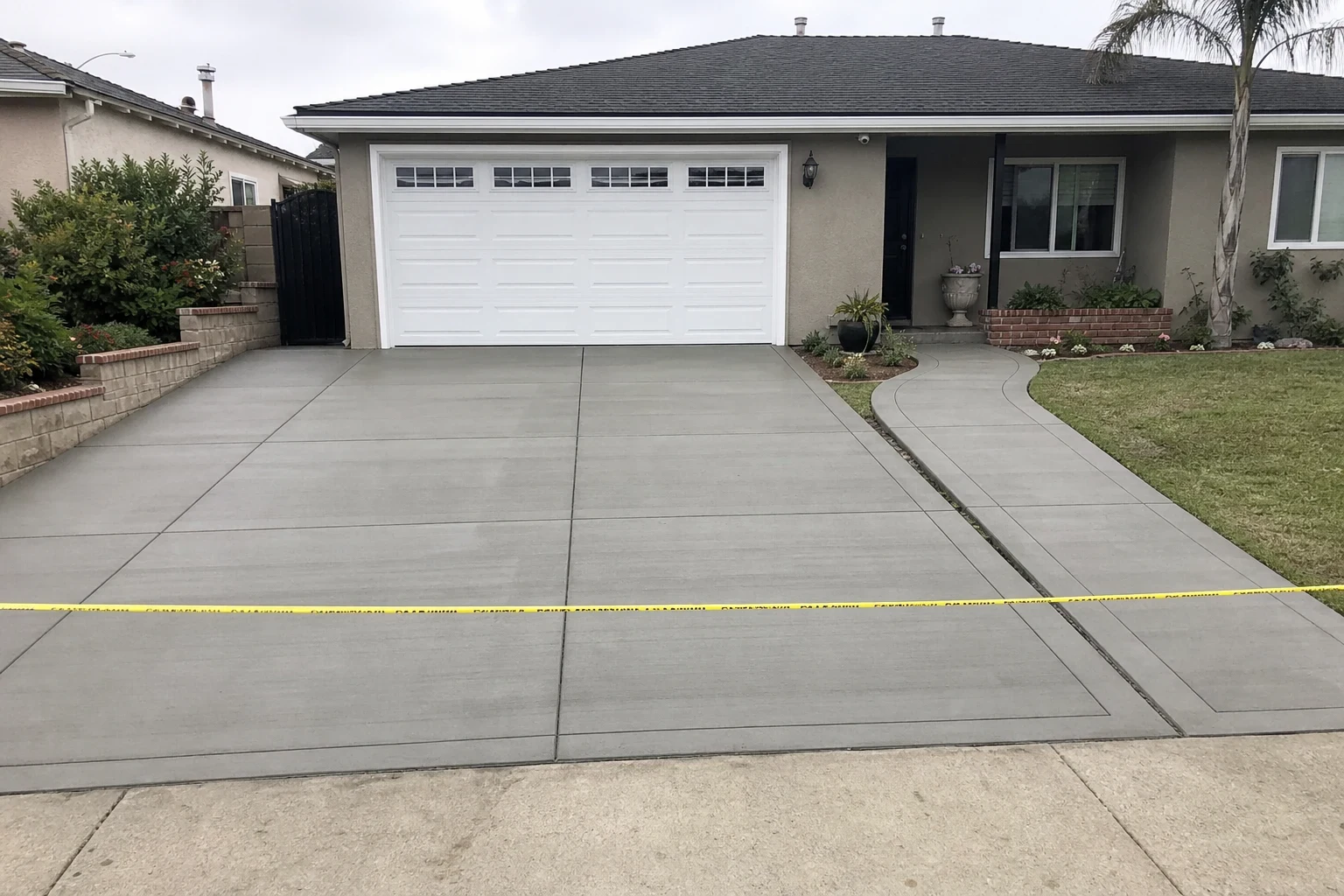
Ready to replace that patio?
Tell us what you are seeing out back. We will come look, explain what it needs and give you a written estimate. Get your quote by phone.