ServicesConcrete Backyards
Concrete Backyards in Buena Park
We pour full backyard concrete that slopes water away from your house, holds up on clay soil and gives you a yard you can actually use. If a storm left your yard ponded, washed out or cracked, we can walk it with you and plan a clean new pour.
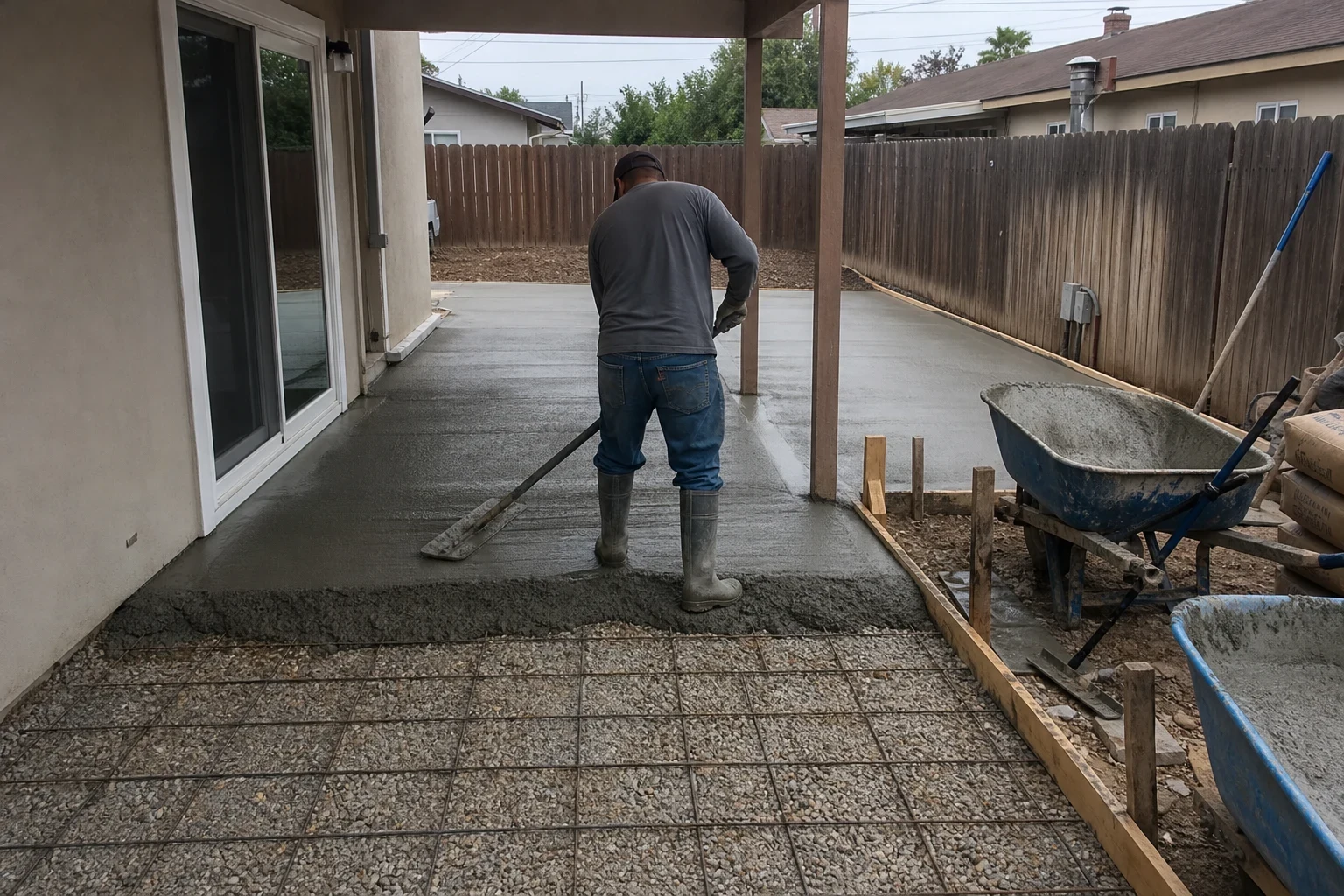
A new backyard, poured to handle the next storm
A concrete backyard is a larger job than a patio. We cover most or all of the yard, from the back door to the fence lines, and plan it as one system: slope, drains, joints and edges. Done right, rain runs off toward the street or a drain instead of sitting against your foundation.
Most people call us after a hard rain shows them what is wrong. Water pools by the slider. Old slabs have tipped toward the house. Mud tracks inside every time it storms. Those are signs the yard needs new concrete with the grade set correctly, not another patch.
We tell you plainly what we see. If only part of the yard needs new concrete, we say so and price it that way.
What a backyard pour includes
- Demolition and haul-off
- We break out old slabs, pavers, dead lawn or cracked walks and haul the debris away. You are not left with a pile by the side gate.
- Grading and slope
- We set the finished grade so water moves away from the house, usually a gentle fall you can barely see. This is the step that decides whether your yard floods next winter.
- Base and reinforcement
- We compact a gravel base and add rebar or wire to suit the soil and the load. Clay soil swells when wet and shrinks when dry, so the base matters as much as the concrete.
- Drains and openings
- We can add channel drains or area drains and leave openings for trees, planters or a future spa. We plan these before the pour, not after.
- Joints and finish
- Control joints are cut where cracks would want to form. You pick the finish: broom, smooth trowel, exposed aggregate, or a pattern from our stamped concrete work.
Signs your backyard needs new concrete
Water pools after rain
If puddles sit for a day near the house or the back door, the yard is sloped wrong. That water ends up under slabs and against the foundation.
Slabs tipped toward the house
Old concrete that has settled backward sends every storm straight at your walls. Grinding or patching will not change the direction of the slope.
Washed-out or muddy ground
Bare dirt and worn lawn turn to mud in a wet season and wash out near downspouts. A full pour ends that cycle.
Cracks with lifted edges
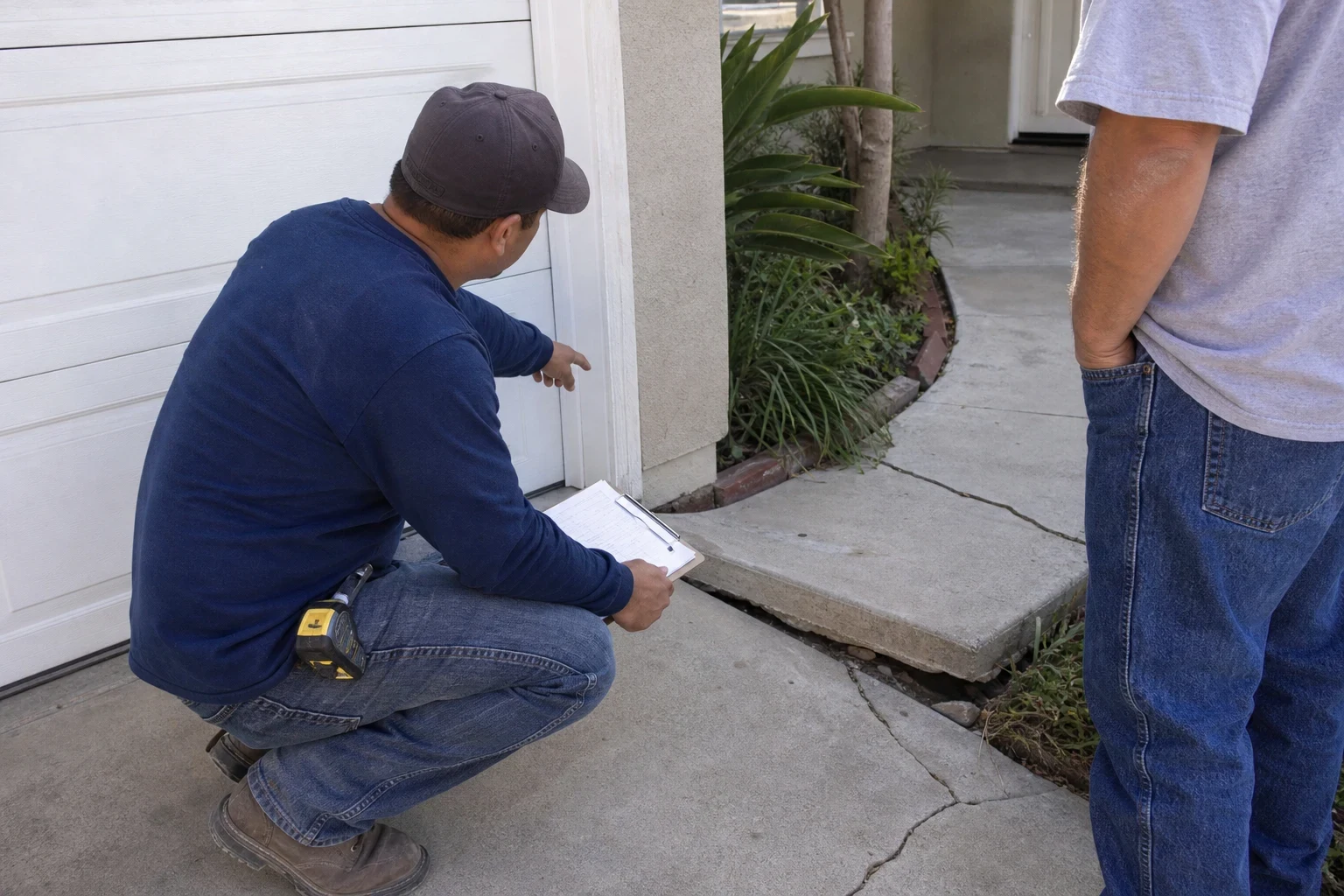
Hairline cracks are normal. Cracks with one side higher than the other trip people and tell you the base under them has moved.
How the job runs
- 1
Walk the yard together
We look at slope, drainage, access and what is under the old surface. We take photos of what we find and talk through options with you.
- 2
Written estimate and plan
You get a line-item estimate showing demo, base, concrete, drains and finish. If a permit is needed for drains or other work, we tell you and handle it.
- 3
Demo and prep day
We protect walls, windows and plants, then break out and haul off old material. Then we grade, compact the base and set forms and steel.
- 4
Pour and finish
We pour, finish and cut joints the same day. We keep the pour off rainy days, since water on fresh concrete weakens the surface.
- 5
Cure and cleanup
We clean the site and tell you when to walk on it, usually a day or two, and when furniture and grills can go back. Heavier loads wait about a week.
What moves the price
Every backyard is different, so we price from what we see on the walk. The biggest drivers are size, what has to come out and how hard it is to get material in. You see each of these on your written estimate, so there are no surprise line items later.
- Square footage and thickness
- More area means more concrete and labor. Thicker slabs cost more but may be needed where a spa or heavy equipment will sit.
- Tear-out and haul-off
- Removing old concrete takes more time and dump fees than clearing lawn. Thick or heavily reinforced slabs add to that.
- Access to the backyard
- If a truck or pump cannot reach the yard, we wheelbarrow through a narrow side yard or bring in a pump. Both change labor and equipment costs.
- Drainage work
- Channel drains, area drains and piping to the street add materials and time, but they are often the reason for the job.
- Finish choice
- A broom finish is the most basic. Exposed aggregate, color and stamped patterns add labor and material.
Backyard concrete questions
Something not covered here? (714) 410-2675
Will a concrete backyard make my yard flood worse?
Not if it is sloped and drained correctly. Concrete sheds water fast, so we plan where that water goes before we pour. Most yards we do drain better afterward than they did with lawn or old slabs.
Can you pour over my old concrete?
Usually we advise against it. Pouring over old slabs keeps the old slope and raises the yard toward your door threshold. In most cases we break it out and start with a proper base.
Should I wait until the rainy season is over?
You can call any time of year. We plan pours around the forecast and will not pour into rain. Getting on the schedule early often means the work is done before the next wet spell.
Can you leave room for trees or a garden bed?
Yes. We form openings for planters, trees or a future spa before the pour. Tell us on the walk and we will mark them out with you.
How long until I can use the yard?
Foot traffic is fine after a day or two. Patio furniture and a grill can go back in a few days. Wait about a week before anything heavy sits on it.
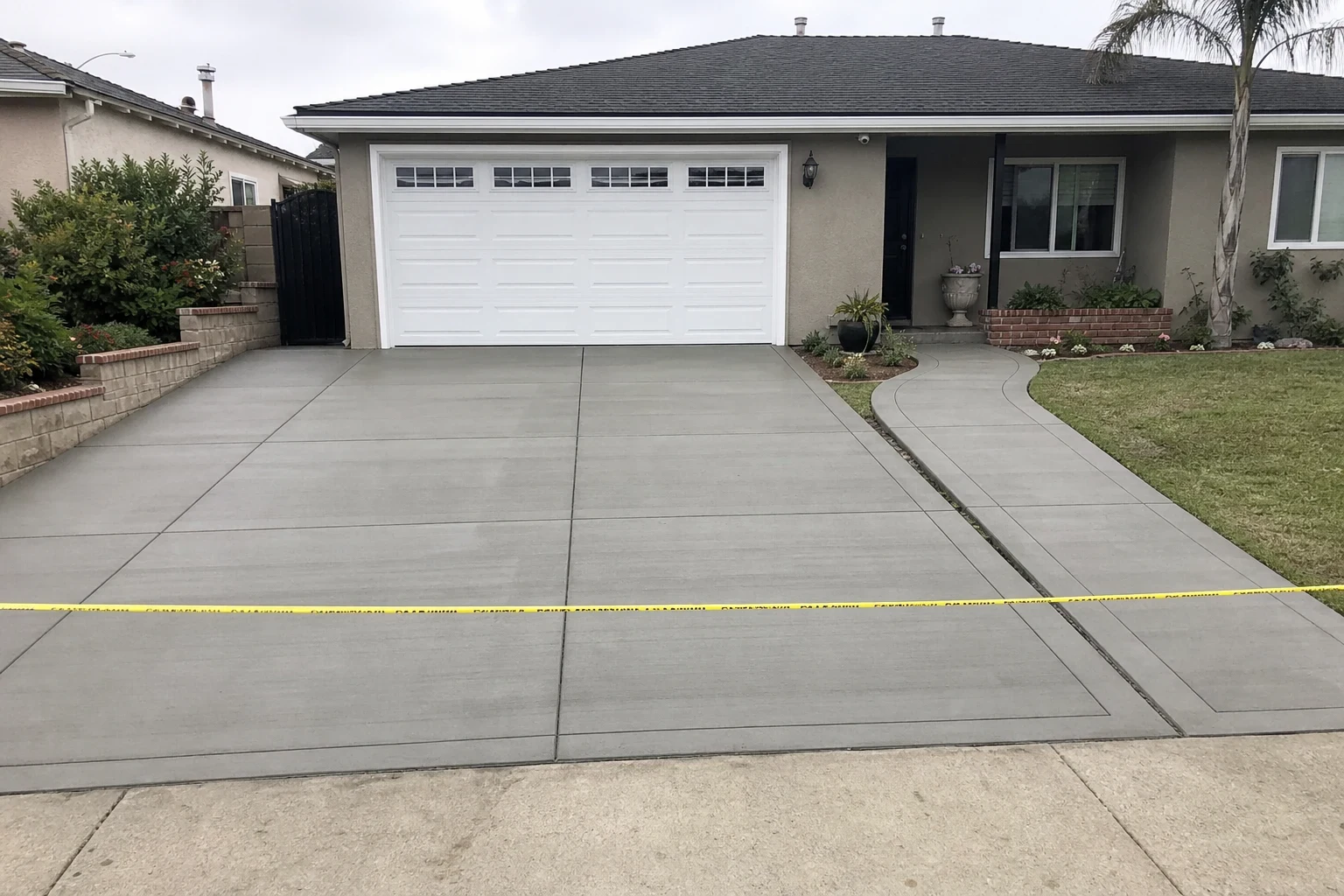
Ready to fix a yard that floods every winter
Tell us what happened in the last storm and what you want the yard to do. We will set up a time to walk it with you and talk through slope, drains and finish.