Buena Park, CA
Concrete Contractor in Buena Park for New Slabs and Storm-Damaged Concrete
We pour new driveways, patios, pool decks, steps and walkways for homes in Buena Park, La Palma and Cypress. When heavy rain undermines a slab or a tree root lifts it, we look at it, tell you plainly if it needs replacing, and give you a written plan you can act on.
- Written line-item estimates
- Photos of what we find
- Plain replace-or-leave answer
- Site cleaned every day
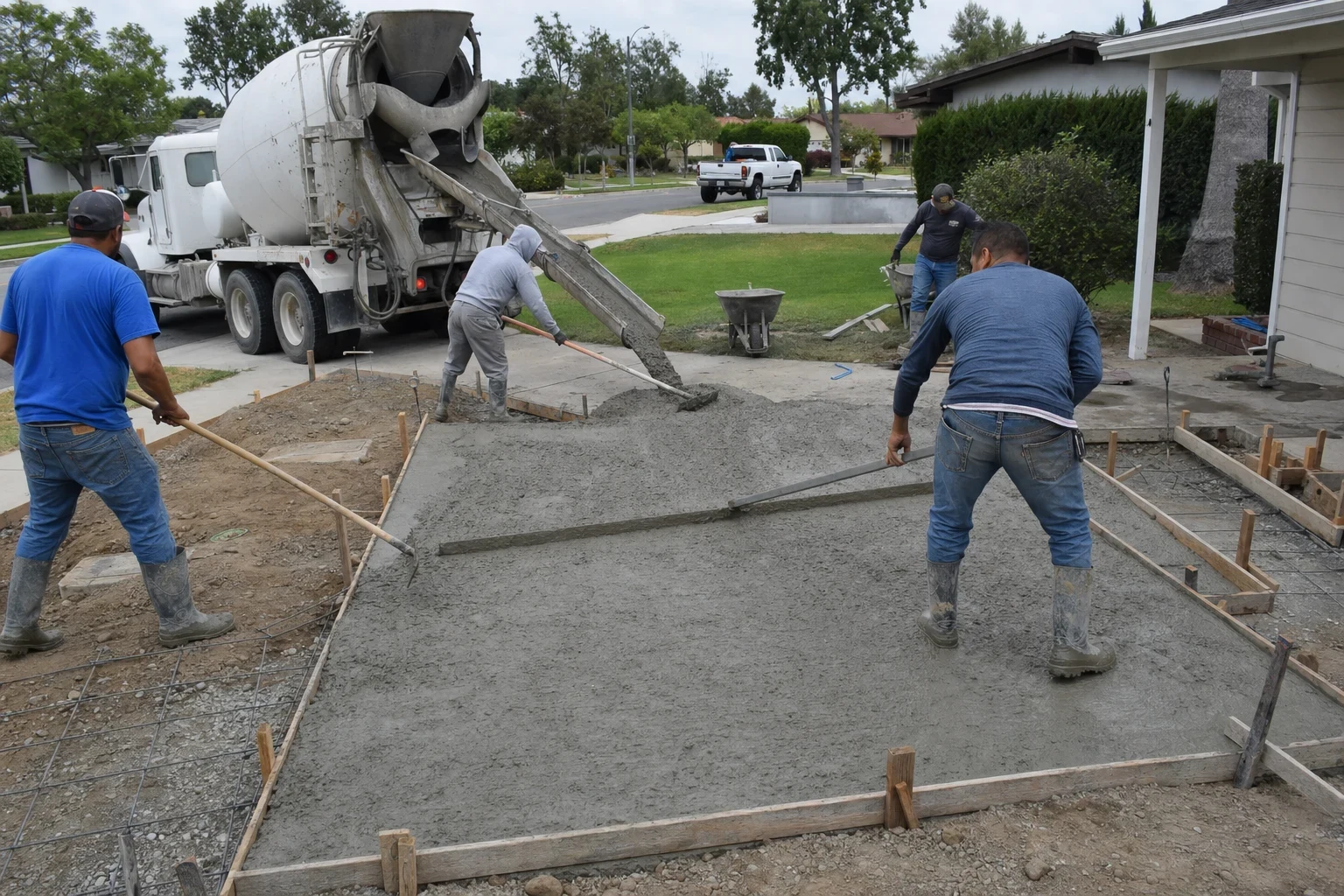
Concrete Work for Your Home
We pour new concrete all around your home, from the front driveway and the walk to your door out to the backyard, the pool deck and the strip along the side of the house. Stamped and colored finishes, courtyards, entry steps, garage floors, plain slabs and pads big enough to park an RV are all part of what we do. When a storm or a burst pipe has ruined an old slab, we break it out, correct whatever failed underneath and pour fresh. Choose a service below to see how that job goes.
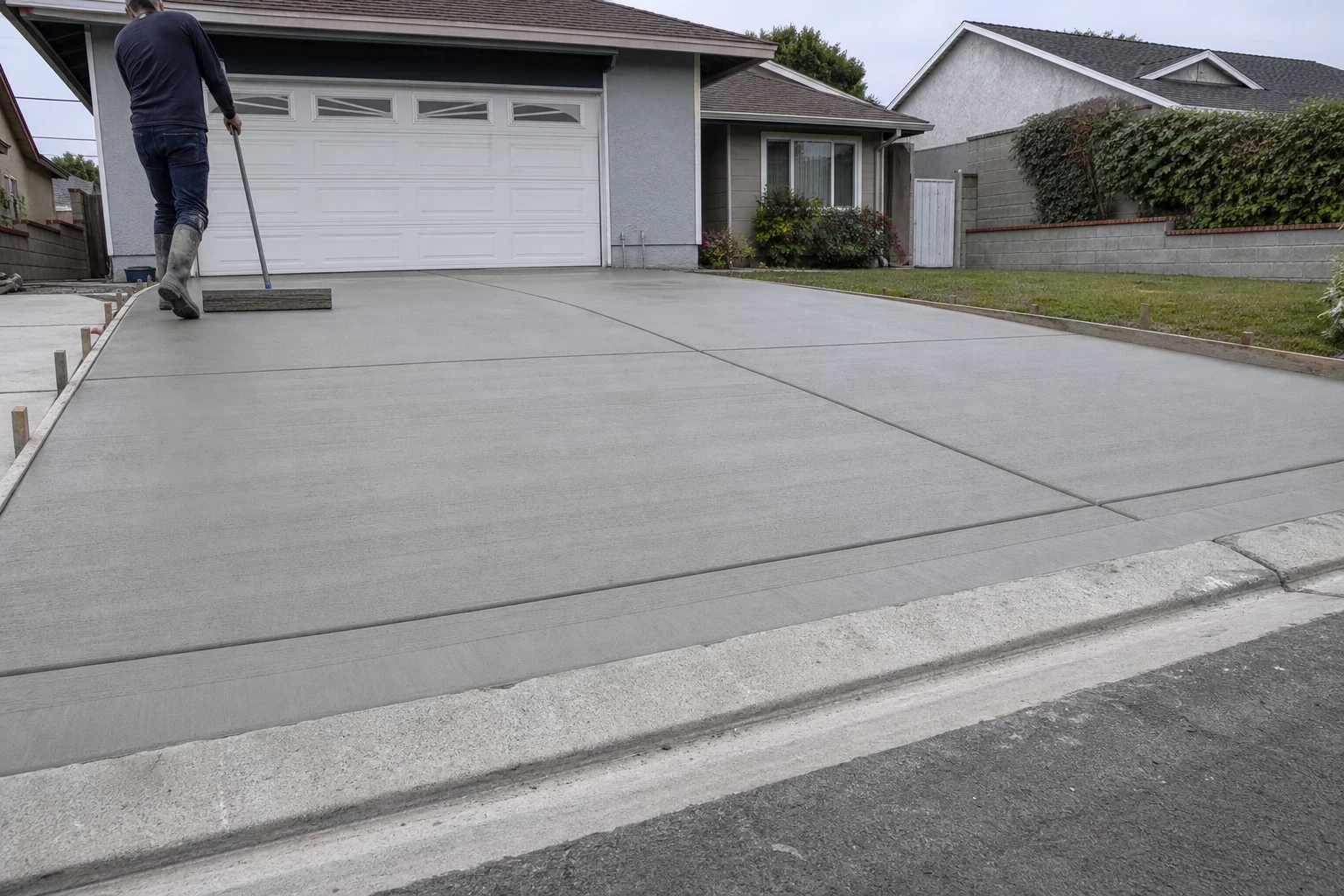
Driveways
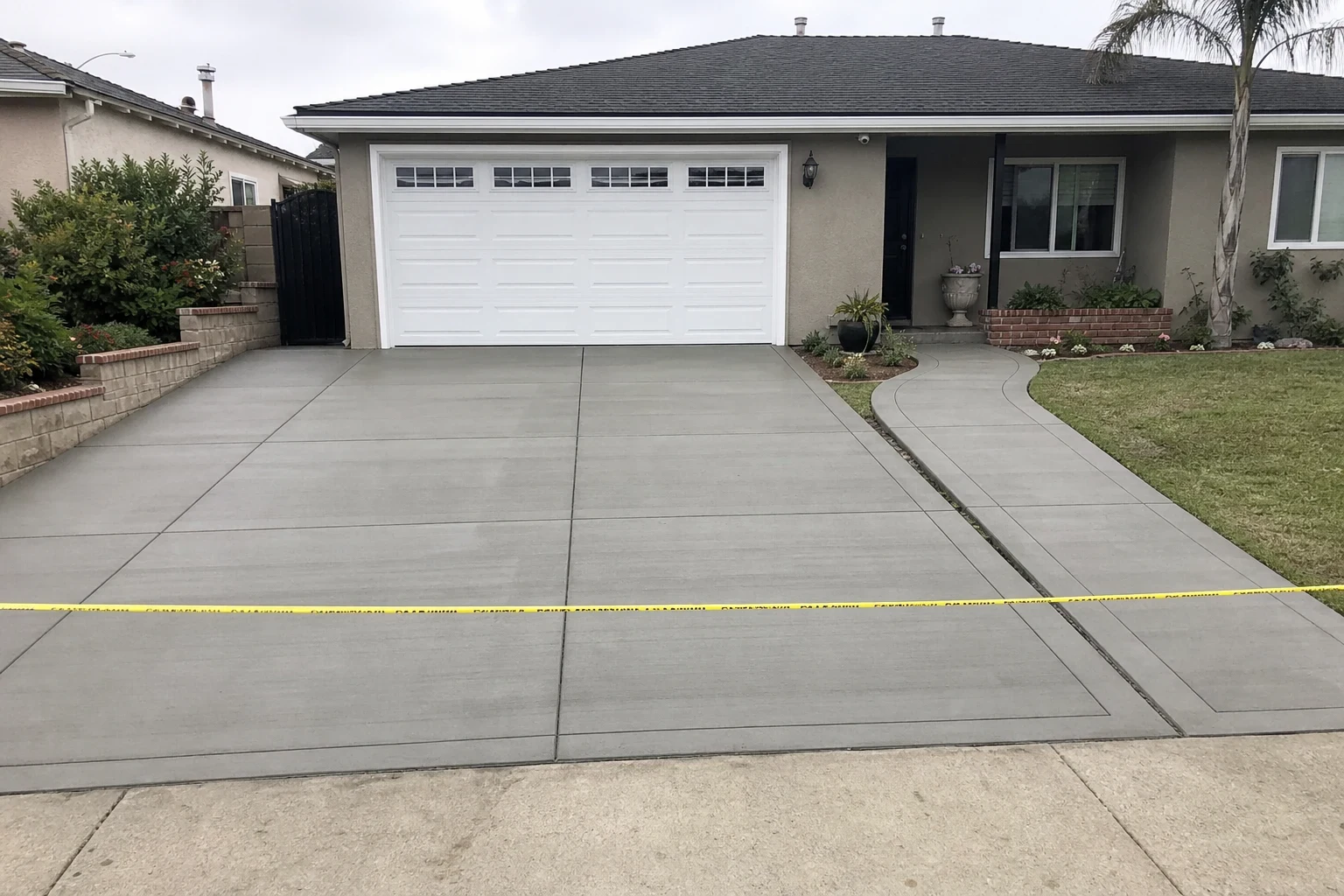
New concrete driveways and full replacements, poured on a compacted base with the right slope so water runs to the street and away from your home.
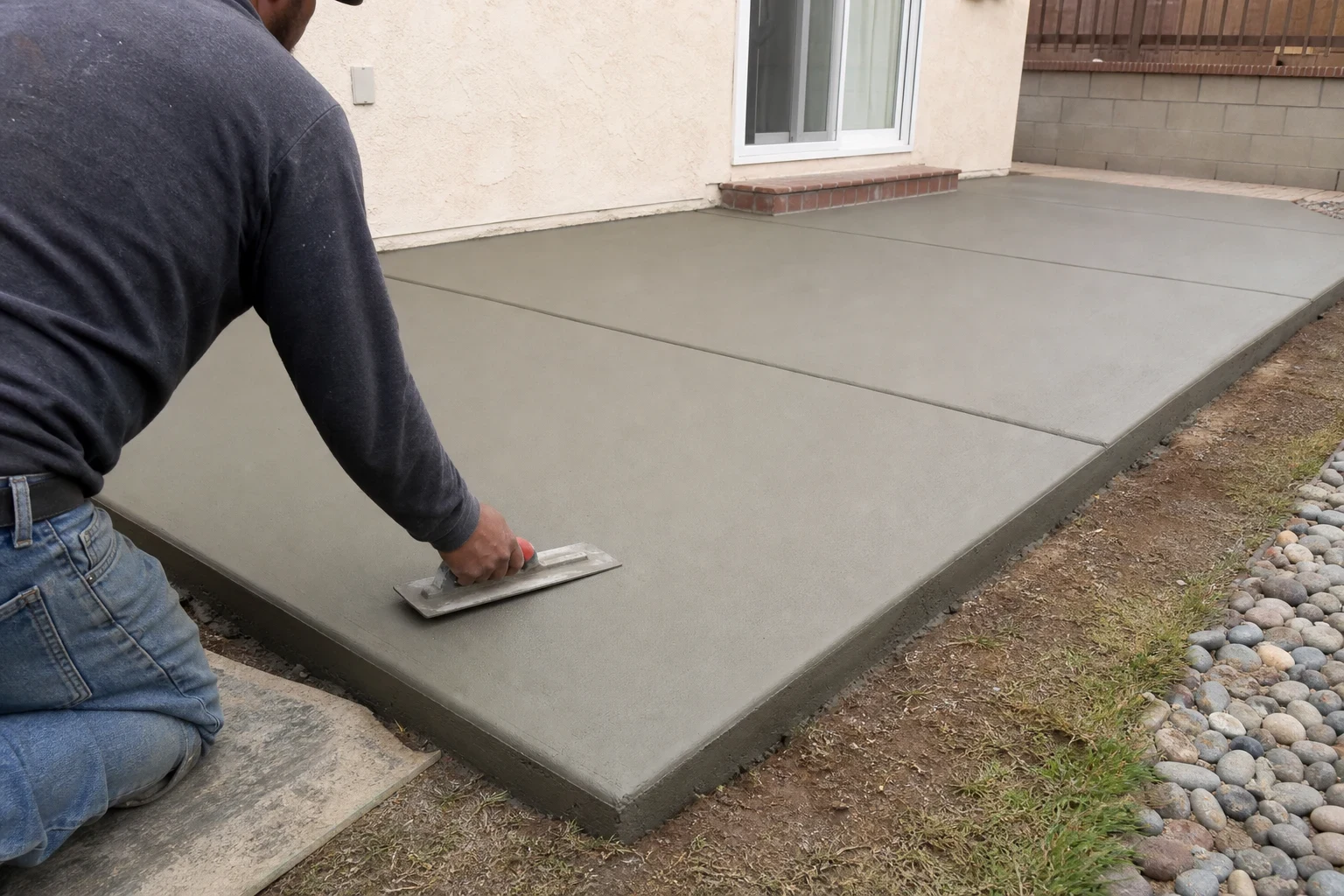
Patios
New concrete patios poured on a solid, compacted base with the right slope, so water runs away from your home and the slab stays flat for years.
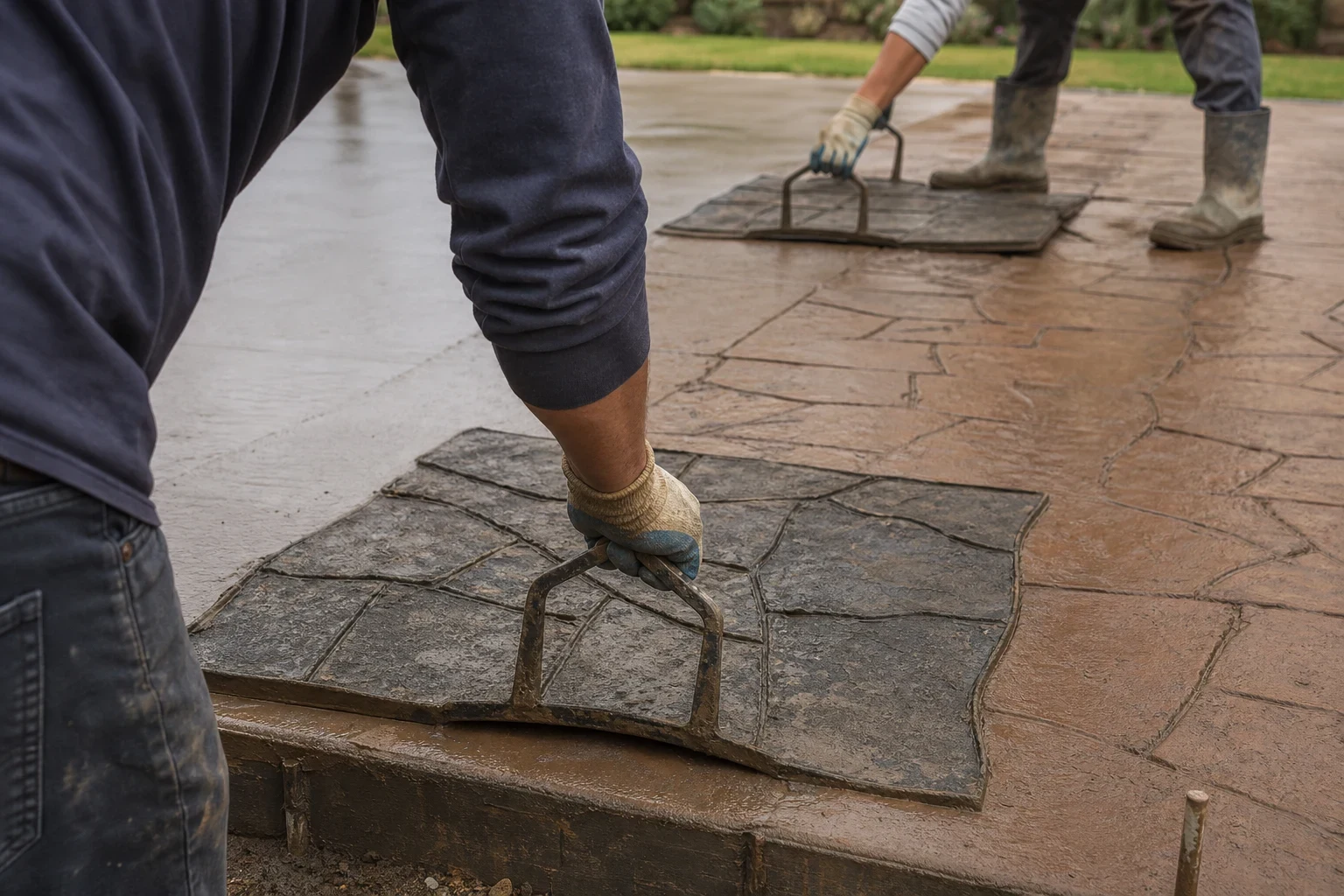
Stamped Concrete
Colored, patterned concrete for patios, walkways and pool decks, poured over a graded base so water runs away from your home.
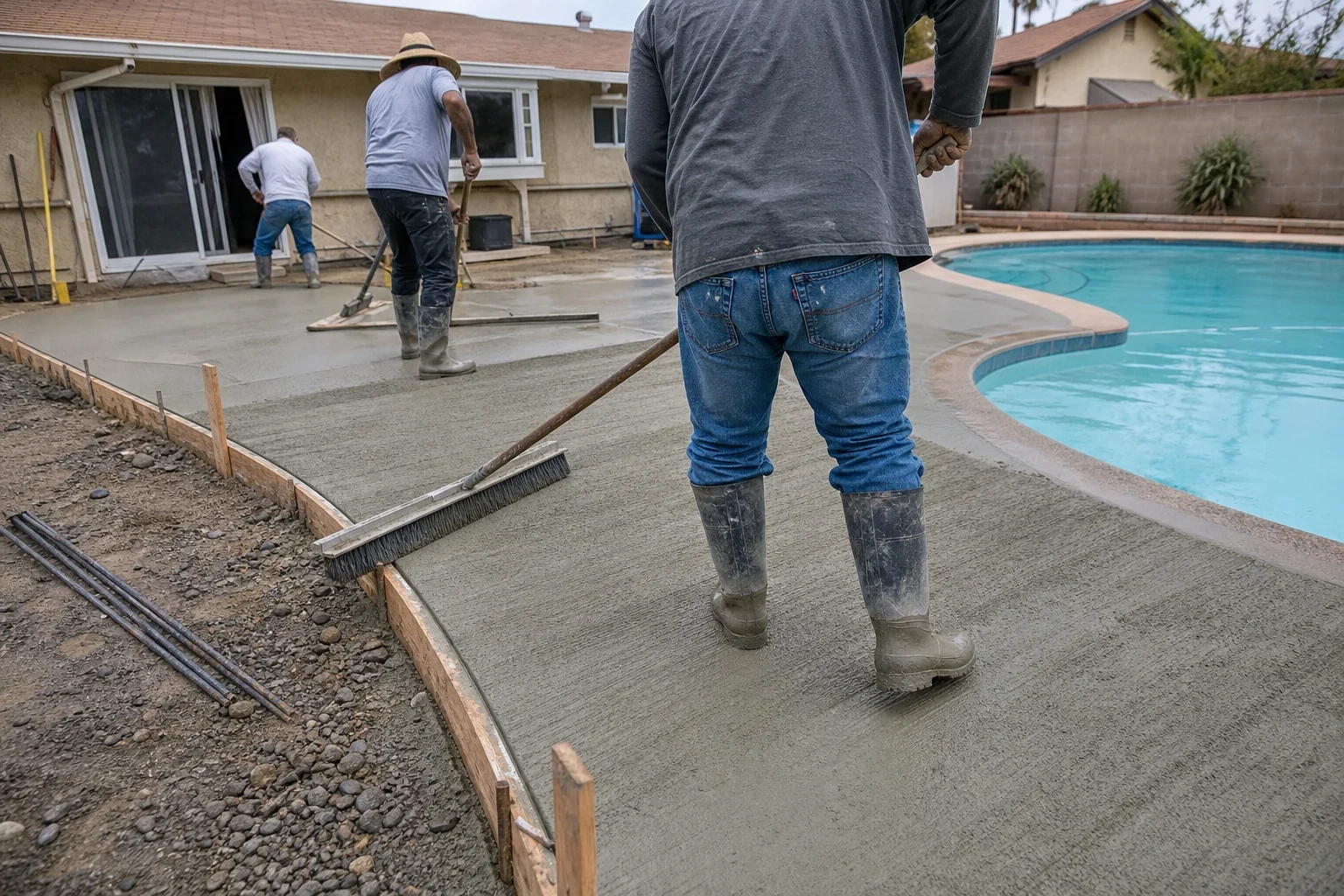
Concrete Pool Decks
We tear out tired or storm-damaged pool decks and pour new concrete that sheds water, stays cooler underfoot and holds up around the coping.
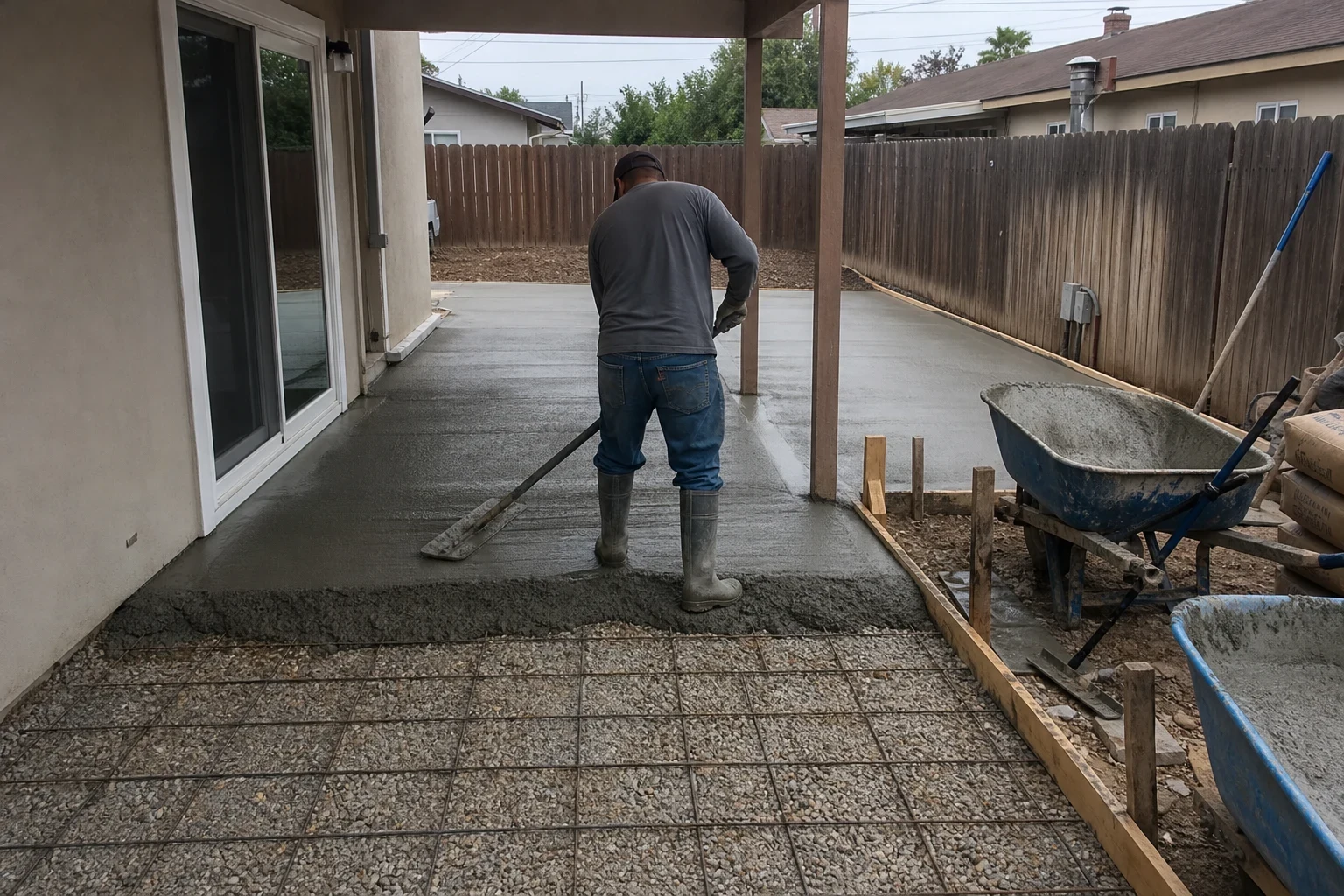
Concrete Backyards
We tear out tired lawn, broken slabs or storm-damaged ground and pour a full backyard of concrete that sheds water away from your home.
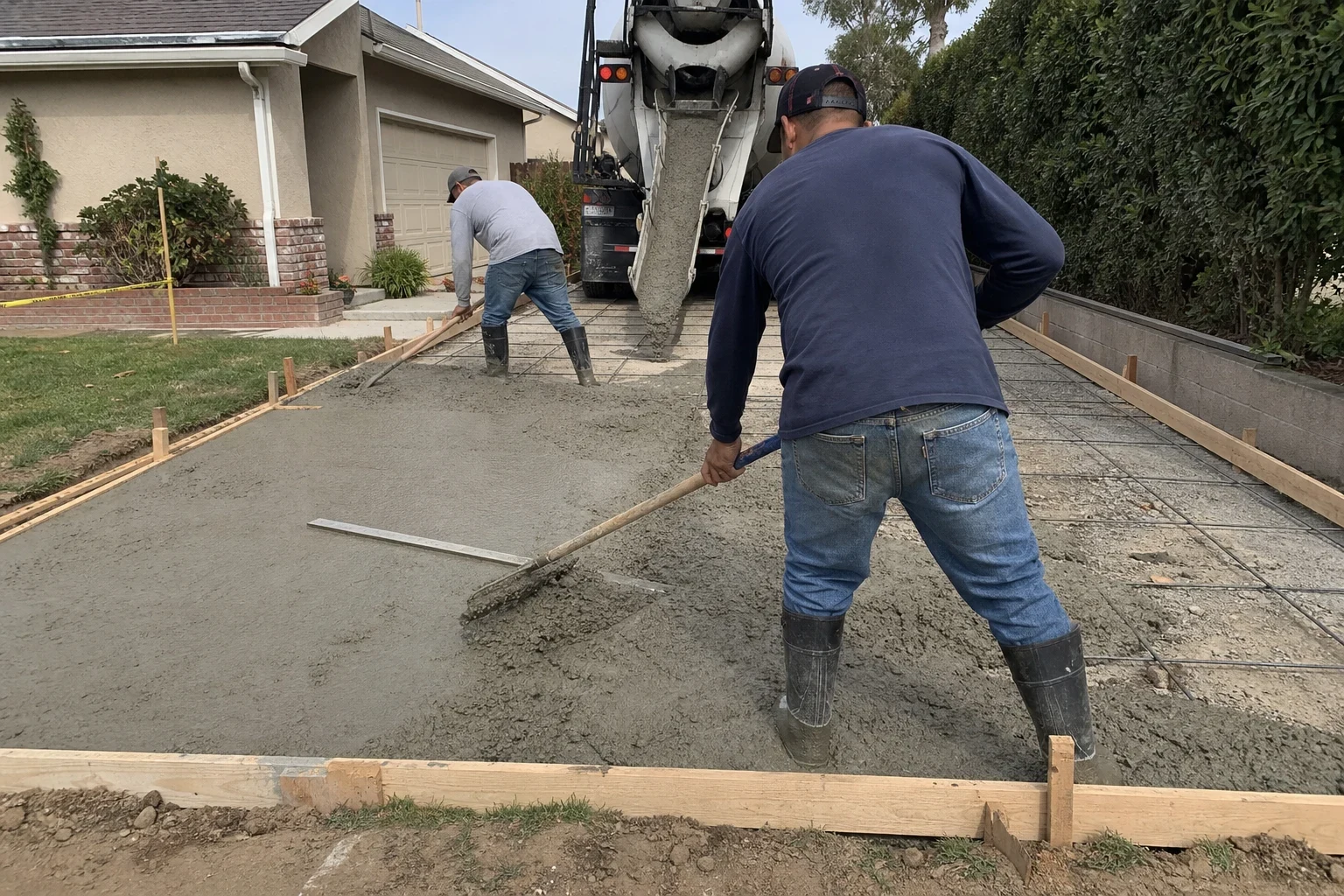
Concrete Slabs
Flat, level concrete slabs for sheds, hot tubs, equipment pads and storm-damaged areas, built on a compacted base that holds up.
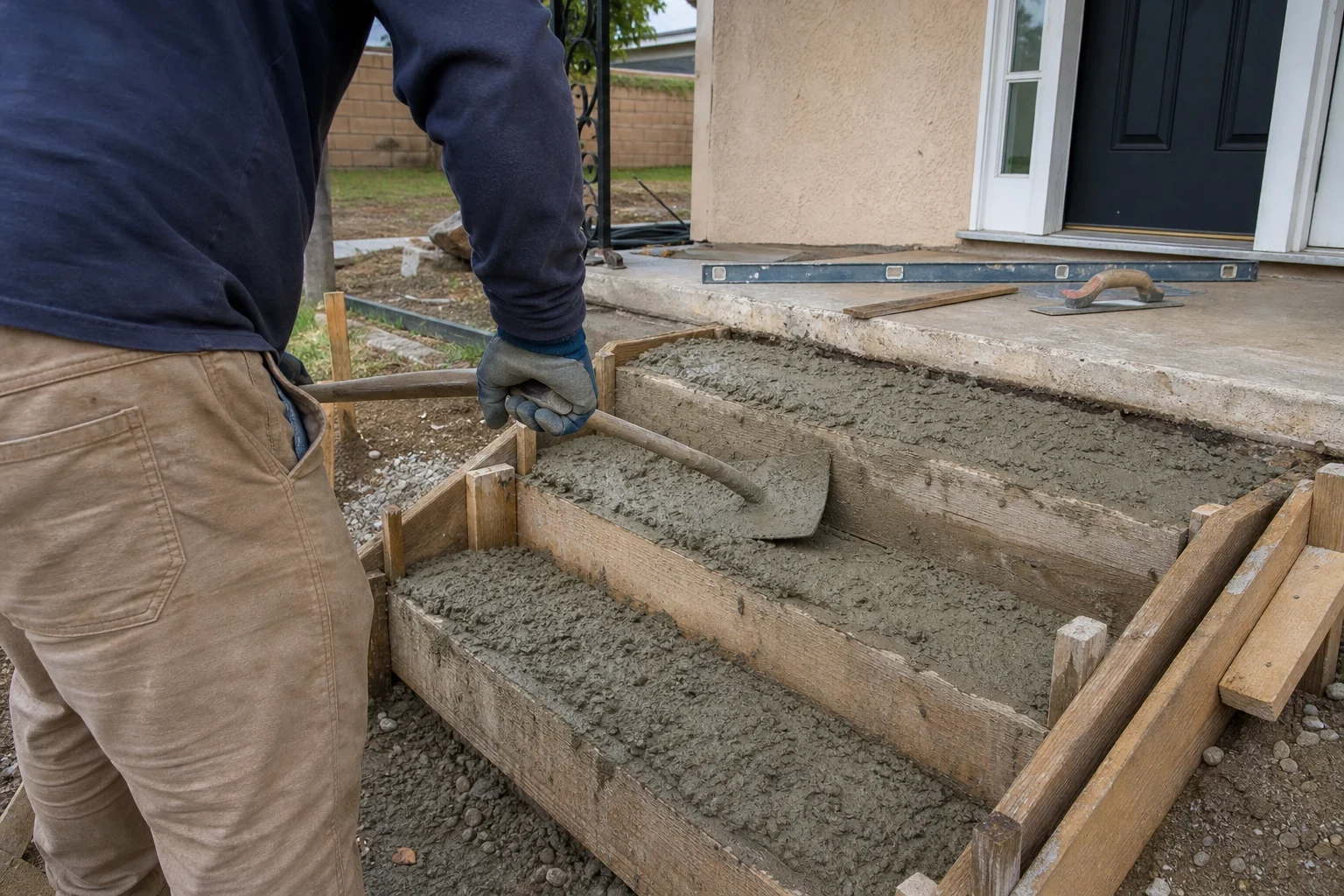
Steps and Stairs
We remove sunken, cracked or pulled-away steps and pour new ones on a compacted base, with even risers and a finish that grips when wet.
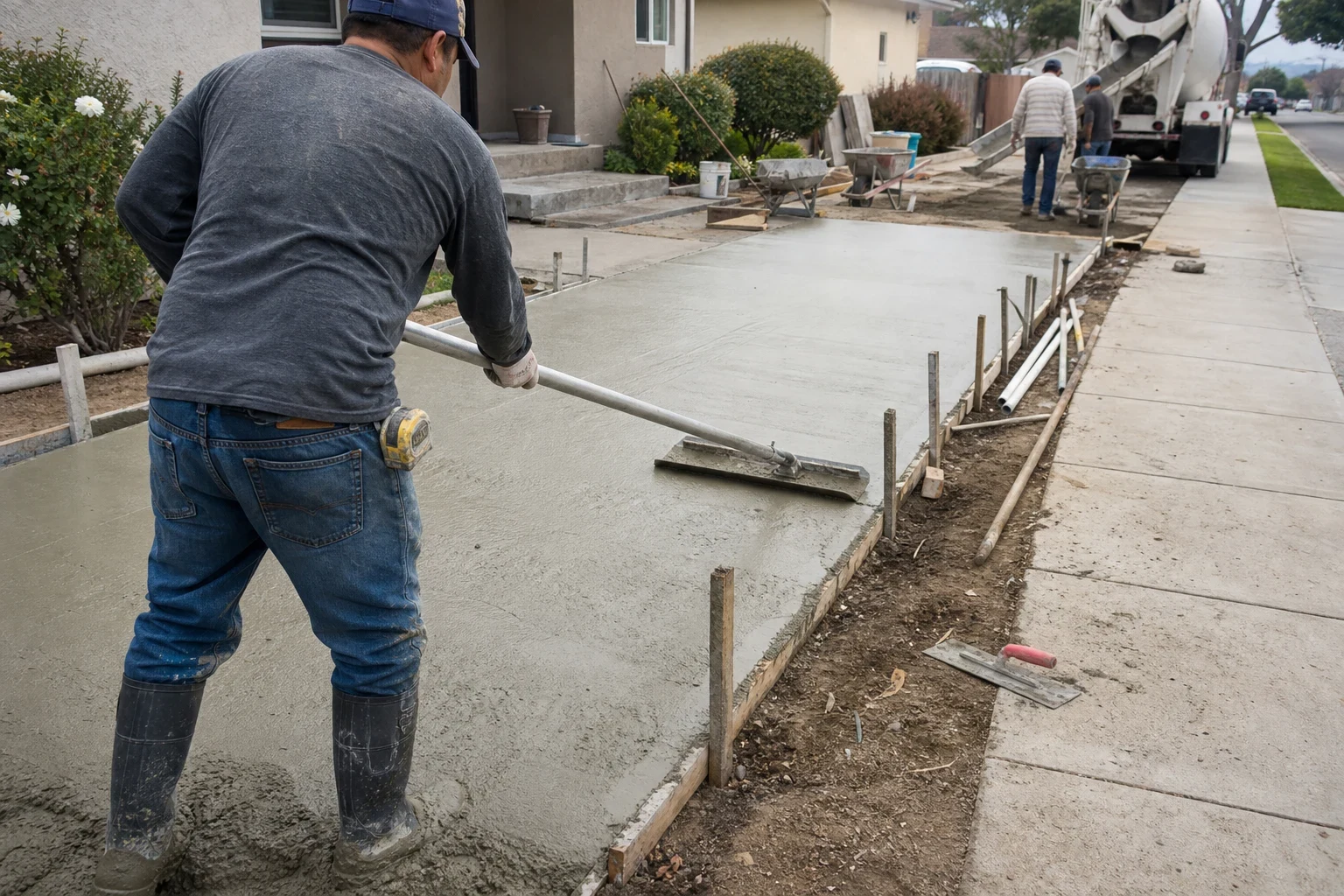
Concrete Side Yards
We pour new concrete side yards with proper slope and drains, so the narrow strip beside your home stays dry, clean and easy to walk.
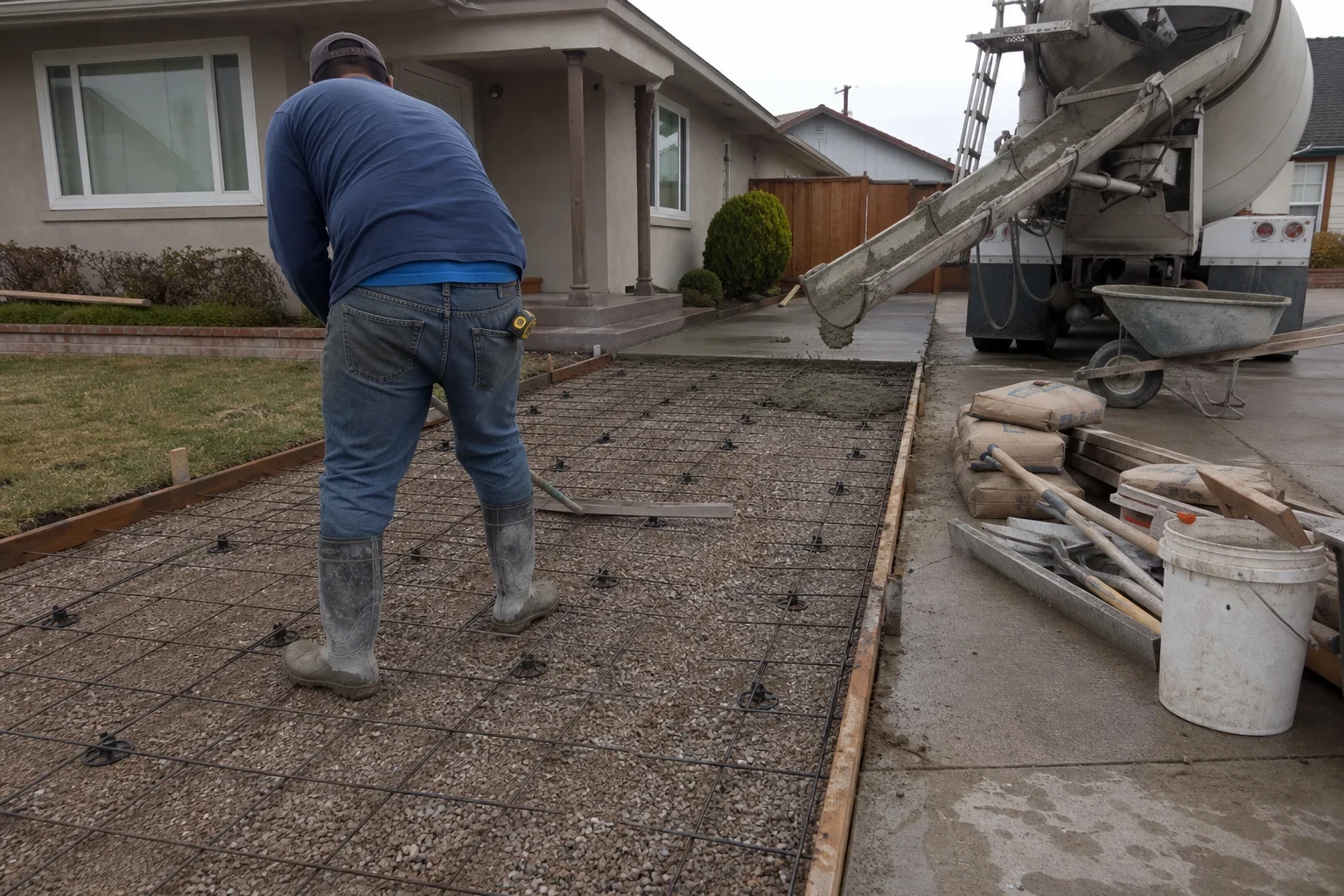
RV Parking Pads
A thick, reinforced slab sized to your rig and sloped to drain, so your RV stops sinking into wet ground or rutted gravel.
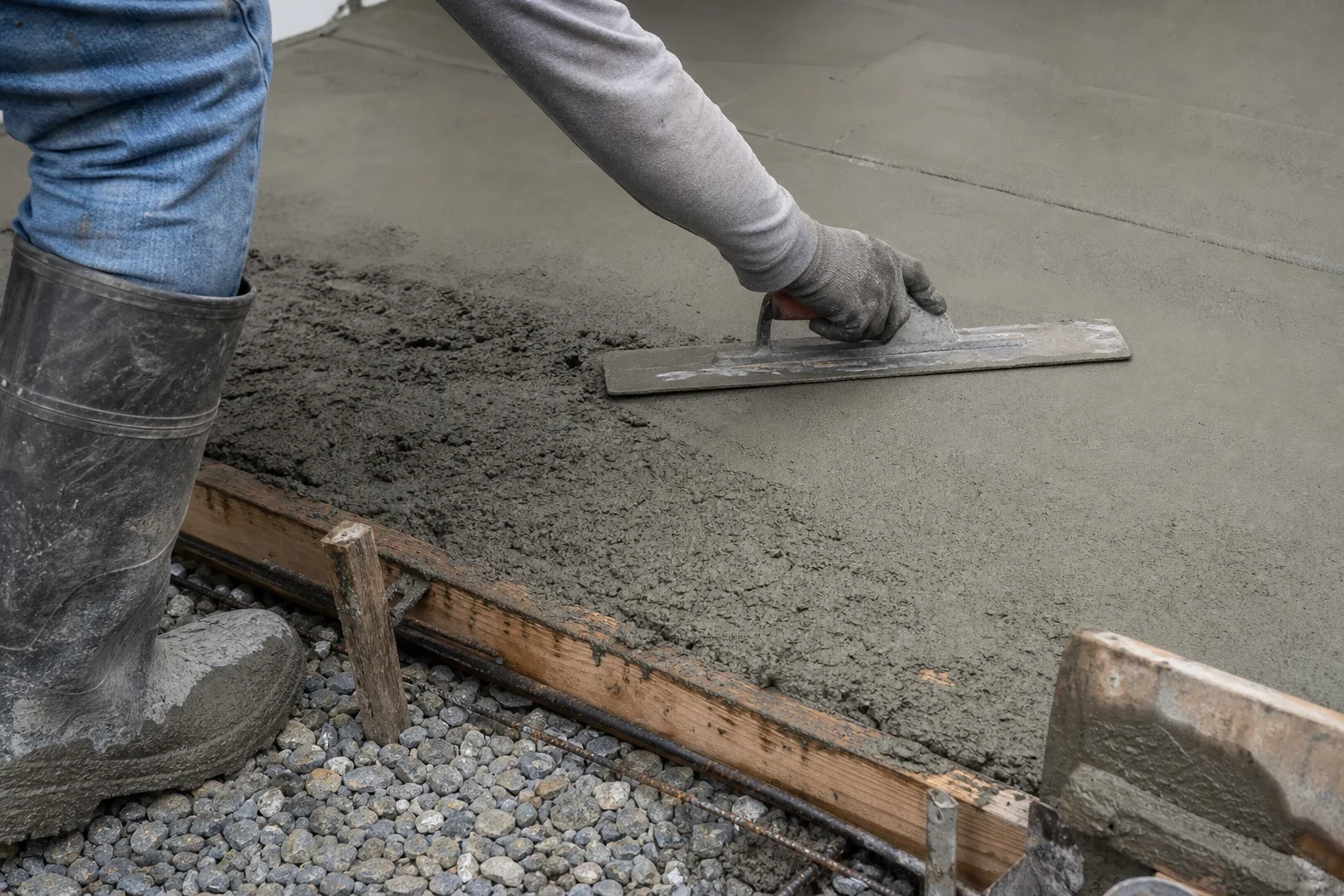
Garage Floors
We remove a cracked, sunken or water-damaged garage slab and pour a new reinforced floor that drains toward the door and holds your car's weight.
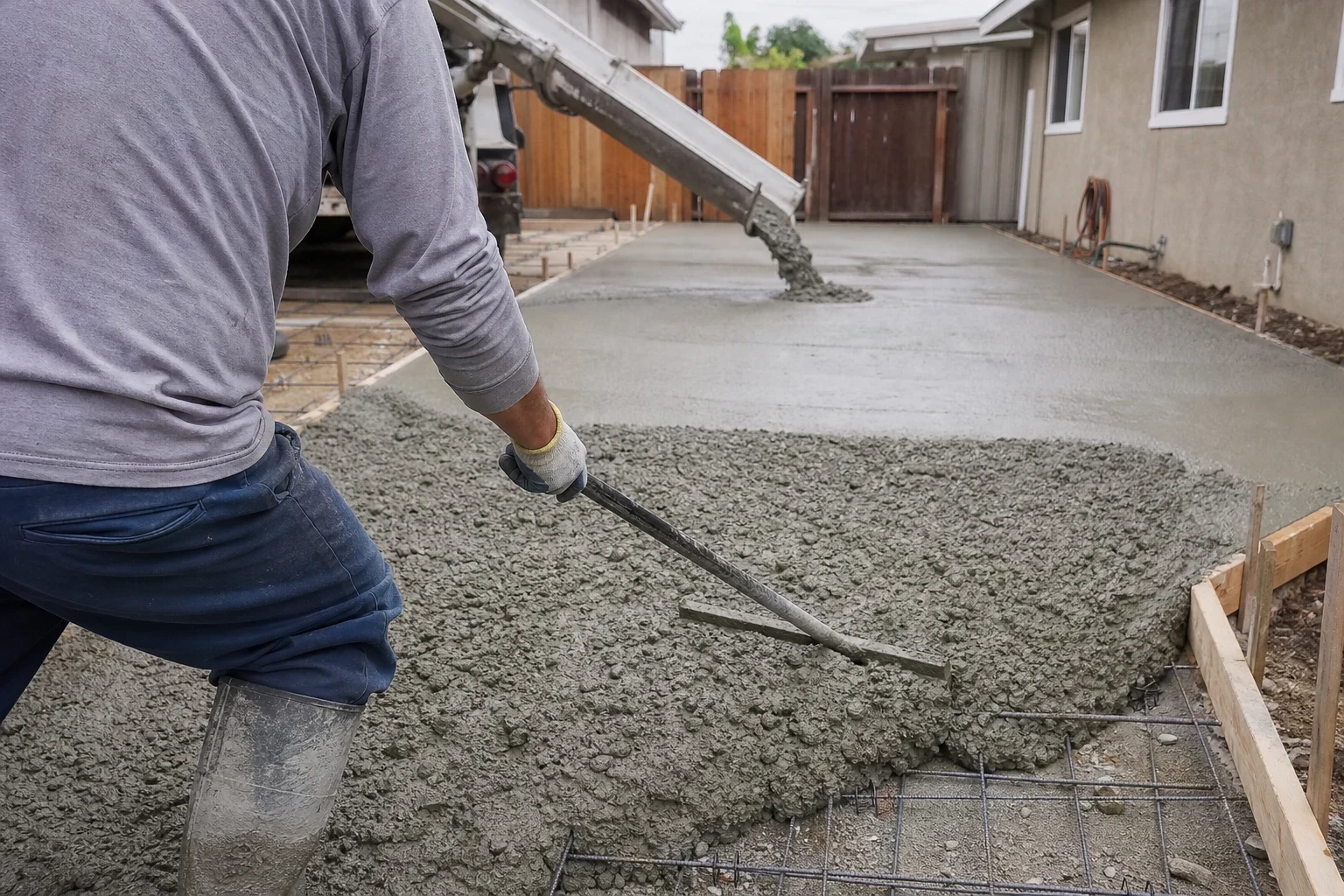
Concrete Courtyards
New courtyard concrete with planned slope, drains and joints, so an enclosed space stays dry and usable after heavy rain.
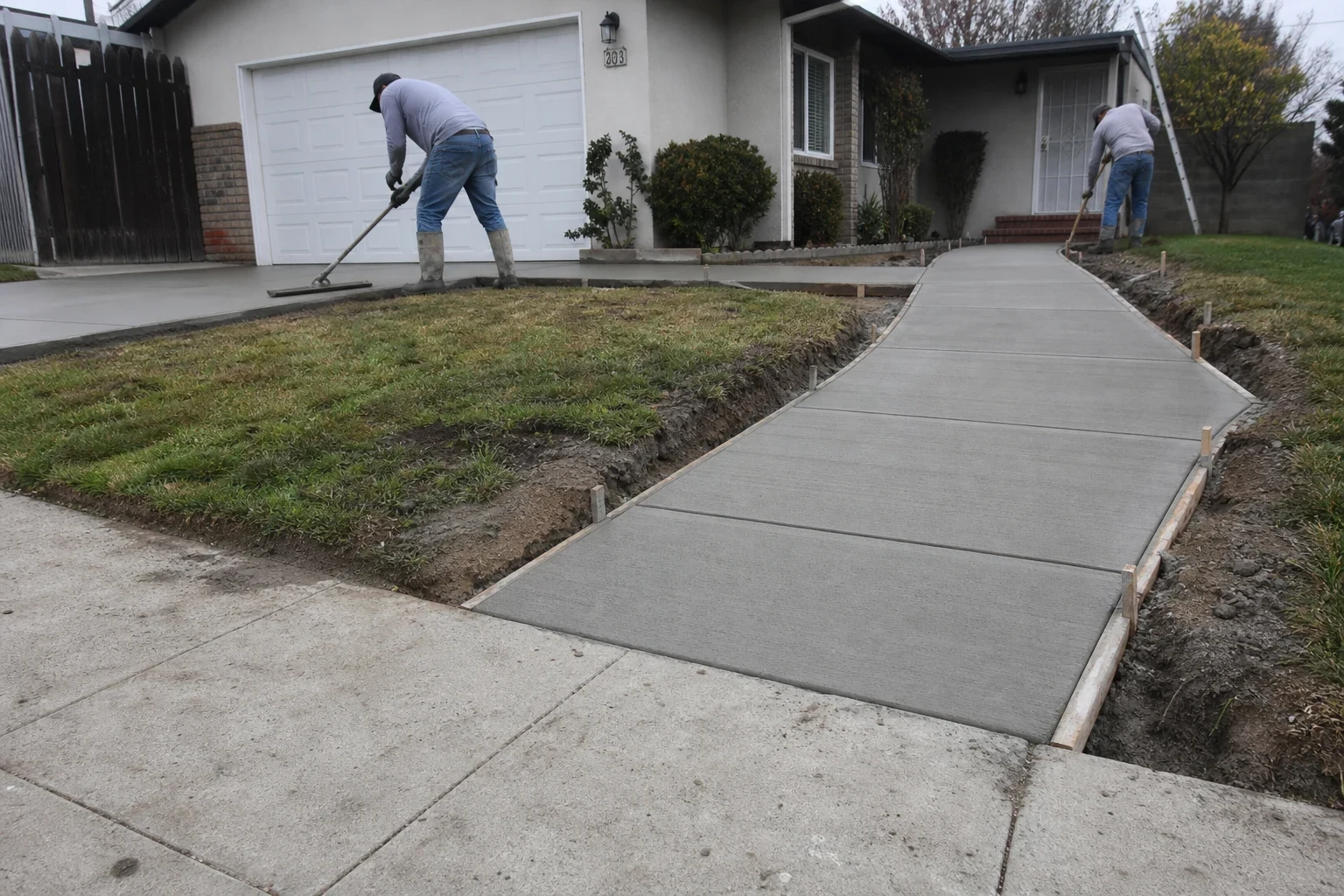
Walkways and Sidewalks
New concrete walkways and sidewalks, poured flat and sloped to drain, with the root, soil or drainage problem behind the old damage handled first.
How We Work When Something Goes Wrong
Most calls after bad weather start the same way: a slab that dropped, cracked through, or started holding water. Here is what you get from us when you call.
We look before we quote
We come out, walk the area with you and check what is under the concrete when we can. A slab that sank usually sank for a reason, like washed-out base or a downspout dumping water in one spot.
Photos and a written estimate
You get pictures of what we found and an estimate broken out line by line. That paperwork is handy if you are talking to your insurance company. We explain what we saw, but the adjuster makes the coverage call, not us.
A straight answer on replacing
Some cracks are cosmetic and can wait. Some mean the base failed and the slab will keep moving. We tell you which one you have, even when the answer is to leave it alone for now.
We fix the cause, not just the surface
New concrete on bad base fails the same way twice. We regrade, compact new base and sort out drainage before we pour, so water moves away from the slab and away from your home.
A clean, protected job site
We cover nearby walls and plantings, keep the work area taped off, and haul away broken concrete. You get your yard back swept, not covered in dust.
Where We Work
We are based in Buena Park and pour concrete for homes all over town. We also work in La Palma, Cypress, Fullerton, Cerritos, La Mirada and Stanton, and in Norwalk, Artesia, La Habra and South Whittier.
- Buena Park
- La Palma
- Fullerton
- Norwalk
- La Habra
- South Whittier
- Cypress
- Cerritos
- La Mirada
- Stanton
- Artesia
If your home is close by but not on this list, call and ask. We will tell you right away if we can take the job.
About Buena Park Concrete Contractor
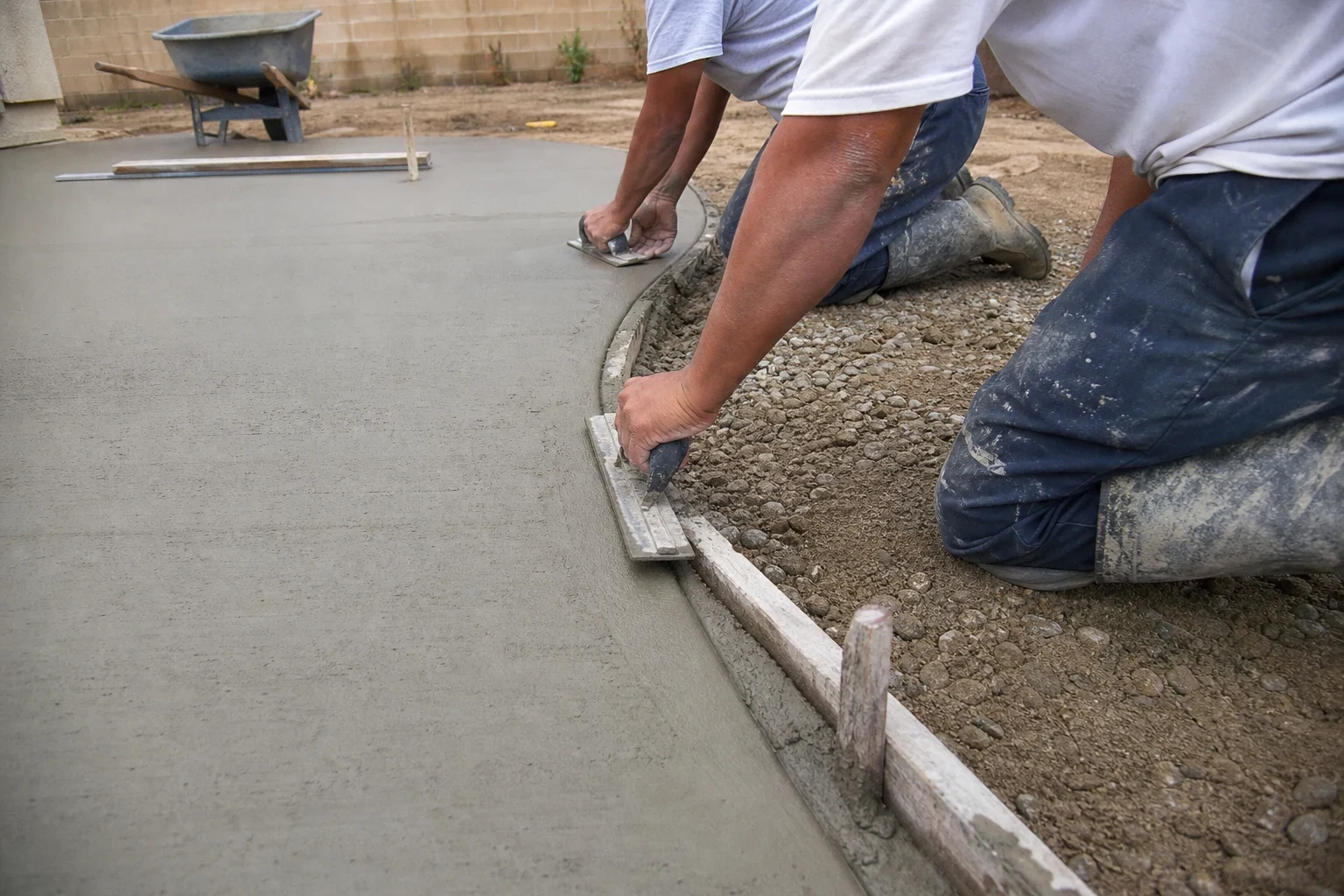
We are a local concrete company working on homes across Buena Park and the cities around it. Our work is new flatwork: the driveways, patios, steps and walkways you use every day.
A lot of our calls come after something goes wrong. A winter storm sends water under a patio, a slab drops by the back door, or an old driveway finally breaks apart. We think people in that spot need clear facts more than a sales pitch. So we show you what we found, tell you what it will take, and let you decide.
On a job day, expect a crew that shows up when we said, keeps the site tidy and talks to you before changing anything.
What Moves the Price
Every job is priced from what we see on site. Two driveways the same size can cost very different amounts. These are the things that make the difference.
We give you a written estimate after we see the job, with each part of the work listed. If something changes once the old slab is out, we show you and talk it through before doing extra work.
- Size and thickness
- Square footage drives most of the cost. A driveway or RV pad that carries heavy weight needs a thicker slab and more steel than a walkway.
- Tear-out and haul-away
- If old concrete has to come out first, breaking it up and hauling it off adds labor and dump fees. Thick or heavily reinforced slabs take longer to remove.
- What is underneath
- After a storm the base is often washed out or soft. Rebuilding it with compacted gravel, and adding drains where water collects, adds cost but keeps the new slab from settling.
- Access to the work
- A wide-open front driveway is easy for a truck to reach. A backyard patio behind a narrow side gate may need the concrete pumped or wheeled in, which takes more time and equipment.
- Finish and design
- Plain broom finish costs the least. Stamped patterns, color, exposed aggregate and decorative borders add material and finishing time.
- Permits and the city sidewalk
- Work that touches the driveway approach or public sidewalk usually needs a city permit and inspection. We pull it and include that cost in the estimate.
How a Job Runs
Most residential pours take a few days from tear-out to finish, plus curing time before you drive or set heavy furniture on it.
- 1
Phone call and site visit
Tell us what happened and what you want. We set a time to come out, measure, and look at the damage and drainage.
- 2
Written estimate
You get the scope, the line items and photos. Take your time. If insurance is involved, you can send them the same paperwork.
- 3
Demo and base prep
We break out the old concrete, haul it away, fix grade and drainage, and compact fresh base. Forms and steel go in next.
- 4
Pour and finish
We pour, finish the surface you picked, and cut control joints so the slab cracks where we want it to, not across the middle.
- 5
Cure and cleanup
We clean up the site and tell you when it is safe to walk on, drive on, or set things back in place. Usually that means foot traffic in a day or two and cars after about a week.
Questions We Hear a Lot
A storm left my patio cracked and sunken. Does it need to be replaced?
Not always. Hairline cracks on a slab that is still level are often just cosmetic. If a section has dropped, tilted toward the house, or water now pools on it, the base underneath has likely washed out. That kind of damage usually keeps getting worse, and we will tell you plainly which one you have.
Will my homeowners insurance pay for this?
It depends on your policy and the cause of the damage, and only your insurance company can decide that. What we can do is give you photos and a written, itemized estimate that you can send to your adjuster. We are happy to explain what we saw so you can describe it accurately.
How do I get a price?
Call us and tell us what is going on. We set up a visit, measure the area and look at what is underneath. Then you get a written estimate with the work broken out line by line, so you can see where the money goes.
Do I need a permit for new concrete?
Many backyard patios and walkways on private property do not. Work that touches the driveway approach or the public sidewalk usually does, and so do some larger projects. When a permit is needed, we pull it and schedule the inspection.
How long before I can use my new driveway?
Walking on it is usually fine after a day or two. Cars should wait roughly seven days, and an RV or heavy truck needs longer than that. Before we pack up, we give you the dates that fit your own slab and the weather that week.
Can you pour right after the rain stops?
Usually not the same day. Soaked ground has to dry out enough to compact, or the new base will settle later. We check the soil when we come out and set the pour for when the ground and the forecast are both ready.
How do you keep the new slab from failing the same way?
We find out why the old one failed first. That usually means rebuilding the base, compacting it properly and getting water to drain away, whether that is regrading or adding a drain. Then we pour with the right thickness and steel for the load and cut joints to control cracking.
Ready to Get That Slab Sorted Out
Tell us what happened and what you would like to see in its place. We will set up a visit and give you a written plan.