ServicesRV Parking Pads
Concrete RV Parking Pads in Buena Park
An RV is heavy, and it sits in one spot for months. We pour pads thick enough to carry that weight, on a base that won't wash out, sloped so rain runs away from your home. You get a level, solid place to park.
A pad made for weight that doesn't move
A car driveway is built for cars. A motorhome or a loaded travel trailer puts far more weight on each tire, and it stays parked in the same place. Over time a thin slab cracks under the wheels, and gravel or dirt ruts out.
Most calls we get come after a hard rain. The trailer has settled into soft ground, a jack stand has punched through, or water is pooling around the tires. That is a good time to fix it the right way instead of adding more gravel.
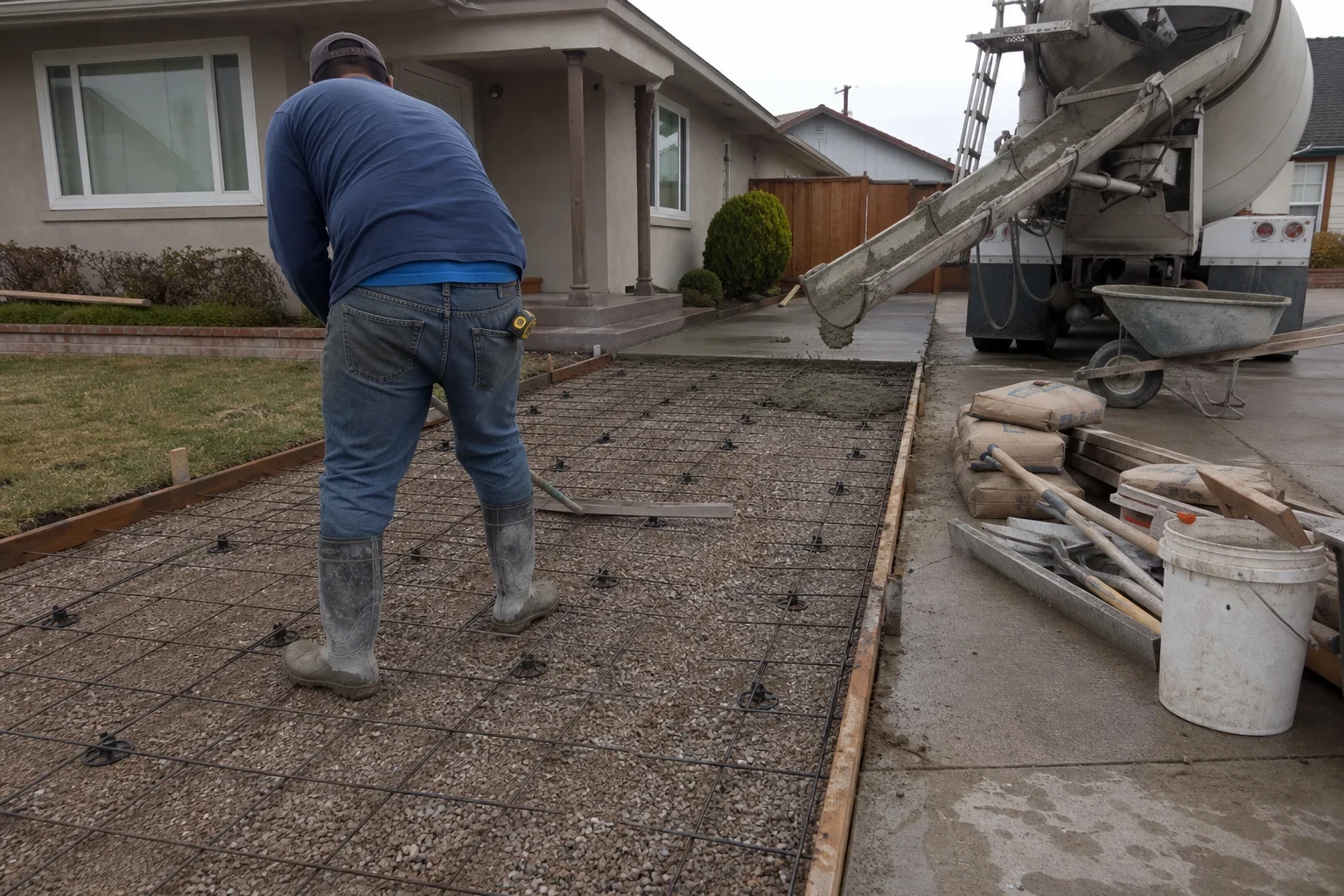
We dig out the soft soil, build a compacted base, and pour a reinforced slab sized to your rig. If you also need a wider driveway or a concrete side yard to get the RV back there, we can plan that with the pad.
Here is what you get with an RV pad
Measuring the rig and the route in
Before anything gets dug, we note the length of your RV, how wide the gate is and how much room you have to swing it. We paint the outline on the ground so you can back in clean, with no curb hop and no scraped fence post.
Pulling out the soft ground
Clay soil soaks up water and shifts when it's wet. We strip off the loose top layer, plus any old gravel, so the new work rests on firm soil.
A packed base underneath
Road base goes down in lifts, and each lift gets compacted before the next. Nobody sees this layer once it's done, but it's the reason the slab won't sink where the tires sit.
Heavier concrete and rebar
An RV pad is poured thicker than a normal driveway, with rebar tied in a grid. Control joints are cut so that shrinkage cracks run straight and stay where we planned them.
Built-in fall for water
The surface has a gentle pitch so rain heads to the street or a drain. It won't run back at your house or sit under the RV.
Broom finish and a clean yard
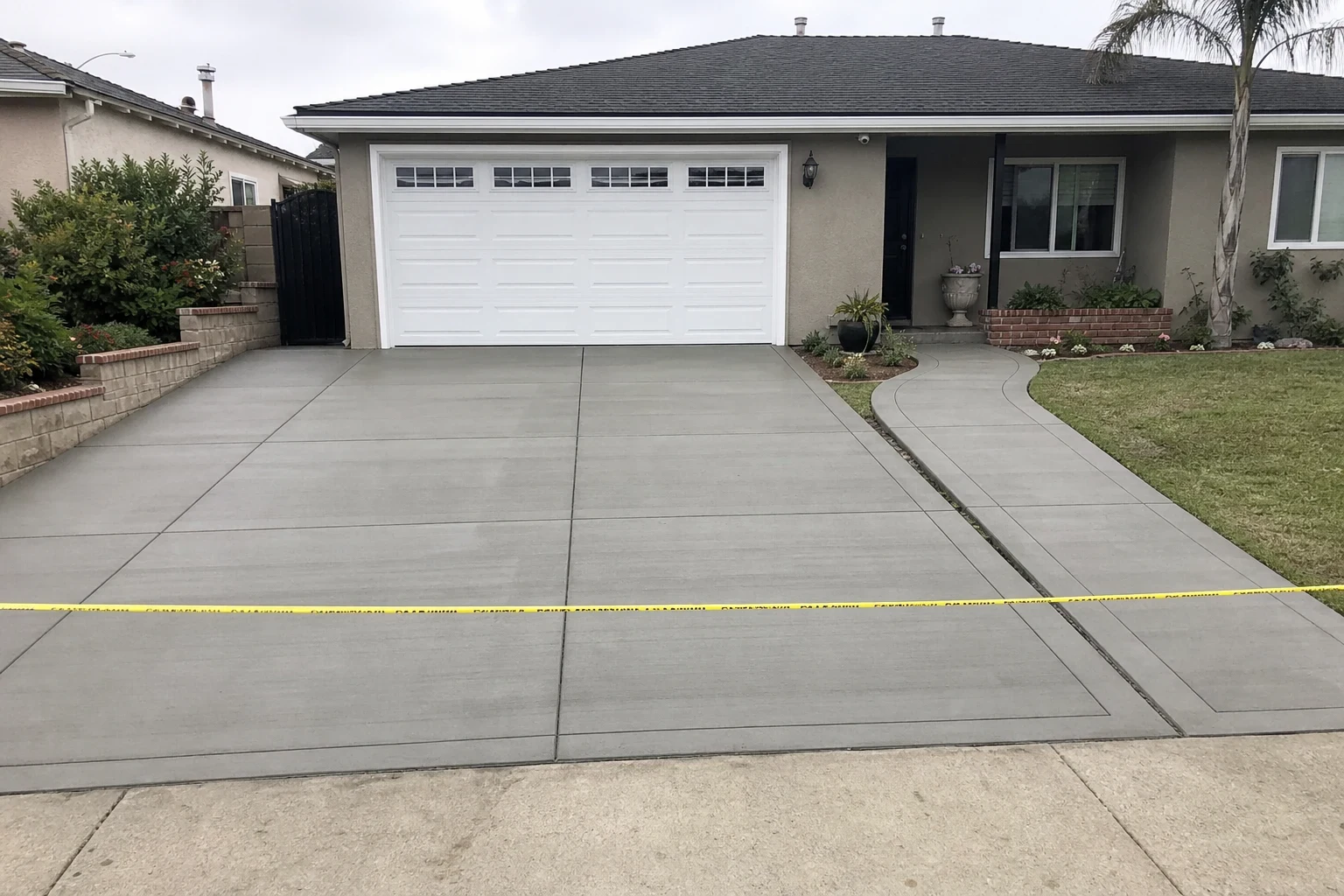
A broom texture gives tires and shoes some grip when it's wet. When we're done, the dirt and form boards leave with us and the area gets hosed off.
Signs it's time for a real RV pad
Tires sinking after rain
If your RV sits lower after every storm, the ground under it is too soft. It will keep getting worse each winter.
Ruts in the gravel
Gravel spreads and sinks under heavy tires. Ruts hold water and make it hard to level the rig.
Cracks in an old thin slab
A slab poured for cars often breaks under an RV. Wide cracks near the wheels mean the slab or the base can't carry the load.
Water pooling around the rig
Standing water rusts frames, rots tires and draws mosquitoes. A sloped pad sends it away.
Parking on the lawn
Dead grass, mud tracked in and a rig that won't sit level. A pad fixes all of it at once.
How the work goes
- 1
Phone call and visit
You tell us about the rig and where you want it. We come out, measure, look at the soil and the access, and go over what it will take.
- 2
Written estimate
You get the scope in writing: pad size, thickness, base, steel and any extra work like removing an old slab or widening the approach. We also tell you if the city wants a permit for the work.
- 3
Dig and base day
We excavate, haul off the spoils, set forms and compact the base. If it has just rained, we may wait a day or two so we aren't compacting mud.
- 4
Pour day
Steel goes in, the truck pours, and the crew screeds, floats and brooms the surface. We cut control joints once the concrete can take it.
- 5
Curing and first use
Stay off it for a few days. Cars can usually drive on it after about a week. We'll tell you when it's ready for the full weight of your RV, which takes longer.
What moves the price
Every pad is priced from the measurements at your home. The size of the rig drives most of it, but what's under the ground matters too. We walk you through each line so nothing comes as a surprise.
- Size and thickness
- A long fifth wheel needs a bigger, thicker pad than a small trailer. More concrete and more steel cost more.
- Soil and base depth
- Soft or wet clay means digging deeper and bringing in more base. We tell you what we find before we pour.
- Removing what's there
- Breaking out an old slab, pulling up gravel or clearing a lawn adds labor and hauling.
- Access to the spot
- A pad behind a narrow side gate may need a concrete pump or smaller equipment. Open driveway access is simpler.
- Permits and approach work
- If the project needs a wider curb cut or approach, the city may require a permit and inspection. That adds time and fees.
RV pad questions
Something not covered here? (714) 410-2675
How thick should an RV pad be?
Thicker than a car driveway. We usually go heavier on both concrete and steel for RVs, and we set the exact thickness by the weight of your rig and the soil we find. The base under it matters just as much as the slab.
How long until I can park my RV on it?
Concrete keeps gaining strength for weeks. Cars can usually go on after about a week. For a heavy motorhome or fifth wheel, we'll give you a date based on the pour and the weather, and it's worth waiting for.
Do I need a permit?
It depends on the work. A pad on your own lot often doesn't, but widening a curb cut or driveway approach usually does. We check with the city before we start and pull the permit when one is needed.
Can the pad go in my side yard?
Often, yes. We look at the gate width, setbacks, utility lines and how the RV will make the turn. If the side yard needs concrete too, we can plan it as one job.
I just had a storm and my trailer sank. What should I do first?
Don't try to drive it out of soft ground. That can tear up the yard and strain the hitch. Let the ground dry, put boards under the jacks if you need to, and give us a call so we can look at the spot.
Do you work outside Buena Park?
Yes. We pour pads in nearby towns like Cypress, La Palma, Cerritos and Fullerton. Ask when you call and we'll let you know.
Get your RV off the mud
Tell us what you drive and where you want it parked. We'll come take a look and give you a written estimate.